Detection of little-known flame retardant in the environment
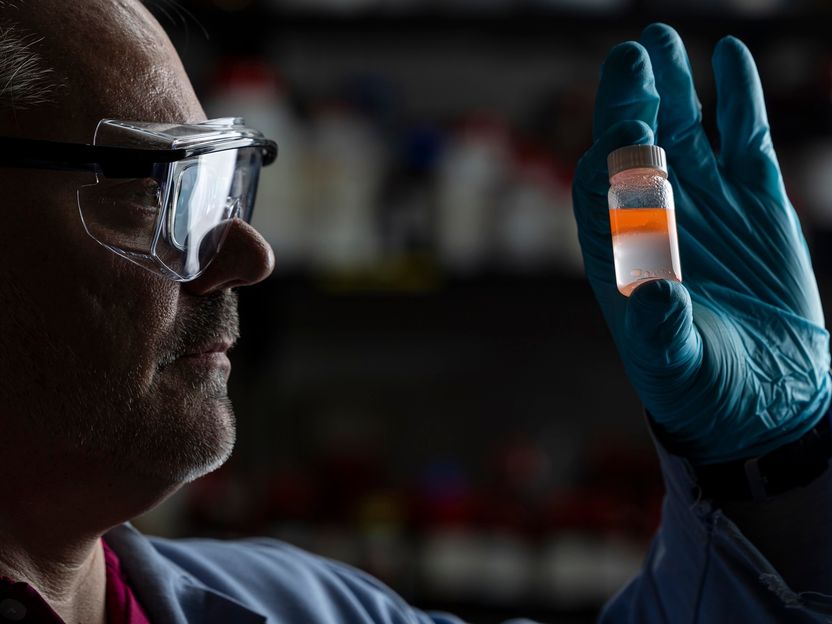
Chemists at Indiana University have published research findings on their discovery of a new and relatively unknown flame retardant in the environment. Their study is the first to detect the potentially toxic chemical in North America.
The chemical, called TTBP-TAX, is part of a new class of triazine-based "alternative" compounds that have been introduced as substitutes for earlier generations of flame retardants that were banned or removed from the market because of health and environmental concerns.
The researchers found the chemical not only in an electronic waste facility, where it would be expected, but in the bedrooms and living rooms of homes in Bloomington, Indiana.
"We don't know much about these compounds," said Marta Venier, a scientist in the School of Public and Environmental Affairs at Indiana University Bloomington and the study's lead author. "This research shows they are in the environment and we come into contact with them, but we don't know much about their effects."
Flame-retardant chemicals have been widely used in consumer products and building materials. They often escape into the environment, where they may persist for years, and have been linked to a variety of human health issues and environmental problems.
The IU researchers' discovery came about by accident and involved chemical detective work led by Guo, the paper's first author. They were analyzing samples from an electronics recycling facility in Canada, measuring known flame retardants. During the analysis, they noticed that the mass spectrometer produced a peak indicating the presence of a chemical they didn't recognize.
By analyzing the structure of the chemical, they guessed it was TTBP-TAX, which had been previously reported in the environment in a 2014 study from the Netherlands. They obtained lab standards and confirmed their hypothesis. Then they decided to look for it in additional samples.
They found significant concentrations of the chemical in all of the dust and air samples from the Canadian e-waste recycling facility. They also found it in 70 percent of household dust samples collected from 20 homes near where the IU researchers live in Bloomington, Indiana. They did not find the compound, or found only trace amounts, in outdoor air, water and sediment samples.
TTBP-TAX, also known as 2,4,6-tris(2,4,6-tribromophnoxy)-1,3,5-triazine, has been manufactured in Asia and imported to the U.S. by several companies, primarily for use in plastic casings for electronics products. Manufacturers say the product is safe, but it can easily degrade to the compound 2,4,6-TBP, which is linked to acute toxicity in fish and to reproductive and developmental toxicity in rodents.
"For most of these compounds, we don't know their effects and toxicity," Venier said, "and until we know they are safe, we shouldn't be coming into contact with them."
She said it is likely that other triazine-based flame retardants are in the environment but haven't been detected because scientists don't know about them or lack the analytical tools to measure them.
Original publication
Jiehong Guo, William A. Stubbings, Kevin Romanak, Linh V. Nguyen, Liisa Jantunen, Lisa Melymuk, Victoria Arrandale, Miriam L. Diamond, and Marta Venier; "Alternative Flame Retardant, 2,4,6-Tris(2,4,6-tribromophenoxy)-1,3,5-triazine, in an E-waste Recycling Facility and House Dust in North America"; Environmental Science & Technology; 2018

Other news from the department science









Most read news






More news from our other portals

















Last viewed contents
BioSystem Development and BAC BV collaborate to bring purification ligands to high throughput biotherapeutic process development
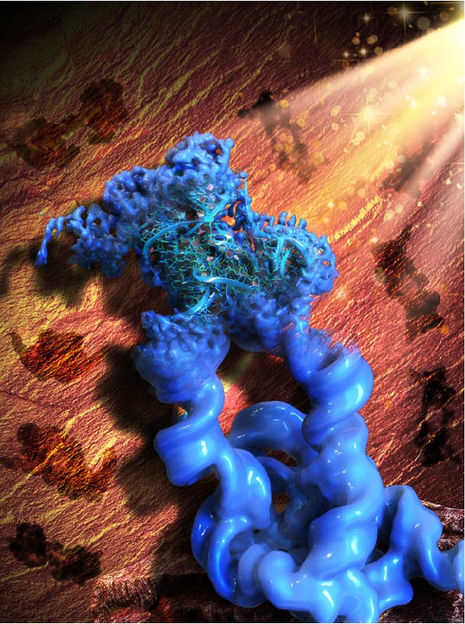
Nanotechnology enables visualization of RNA structures at near-atomic resolution - Combination of nucleic acid nanotechnology and cryo-EM gives unprecedented insights into the structures of large and small RNAs
Analytica 2024: On the path to the zero-carbon lab - More sustainability in the laboratory
Study of hundreds of proteins in parallel - First highly scalable method developed to monitor protein levels and localizations in cells
When every particle counts - Comprehensive guidelines for microplastic extraction from environmental samples developed

Waters and Sartorius Expand Collaboration to Deliver Comprehensive Bioanalytics for Downstream Biomanufacturing
Lab-on-a-chip for tracking single bacterial cells