Double dearomatisation
UK scientists use intramolecular coupling between a nucleophilic and an electrophilic heterocycle to synthesise spirocyclic compounds.
Jonathan Clayden and Heloise Brice from the University of Manchester have synthesised spirocyclic compounds via doubly dearomatising intramolecular coupling of a nucleophilic and an electrophilic heterocycle.
The motivation for this work came from the knowledge that simple aromatics are widely available on a large scale, and the products of dearomatisation are valuable reactive intermediates. 'Our starting materials are simple to make' says Clayden, 'while the products have fascinating structural architecture and display a range of further reactivity.'
'In general, aromatic compounds are stable towards dearomatising attack,' explains Clayden. 'In the reaction reported here however, two aromatic rings react with one another and both lose aromaticity as they do so.'
Clayden believes that this ability to construct quite complex structures in one or two steps opens up the possibility of incorporating this type of transformation into a cascade process, and allows diversity to be introduced. 'This type of reaction could be very valuable in the search for inhibitors of enzymes or ligands for receptors,' says Clayden, which is 'the first stage in the discovery of new medicinal agents.'
Original article: Heloise Brice and Jonathan Clayden; Chem. Commun. 2009
Other news from the department science










Most read news





More news from our other portals


















Last viewed contents

HeartBeat.bio raises € 4.5 million in Pre-Series A financing - New funds to drive development of organoid screening platform for cardiac drug discovery
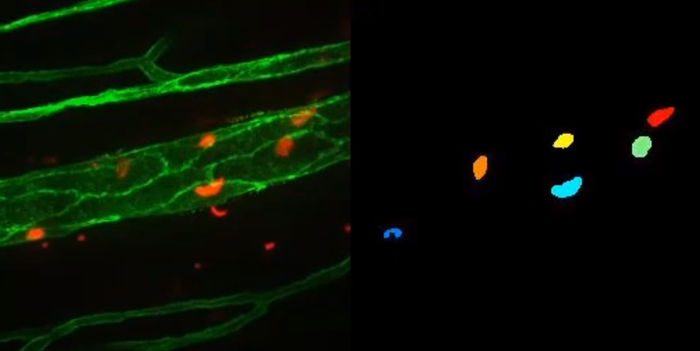
New computer vision system designed to analyse cells in microscopy videos
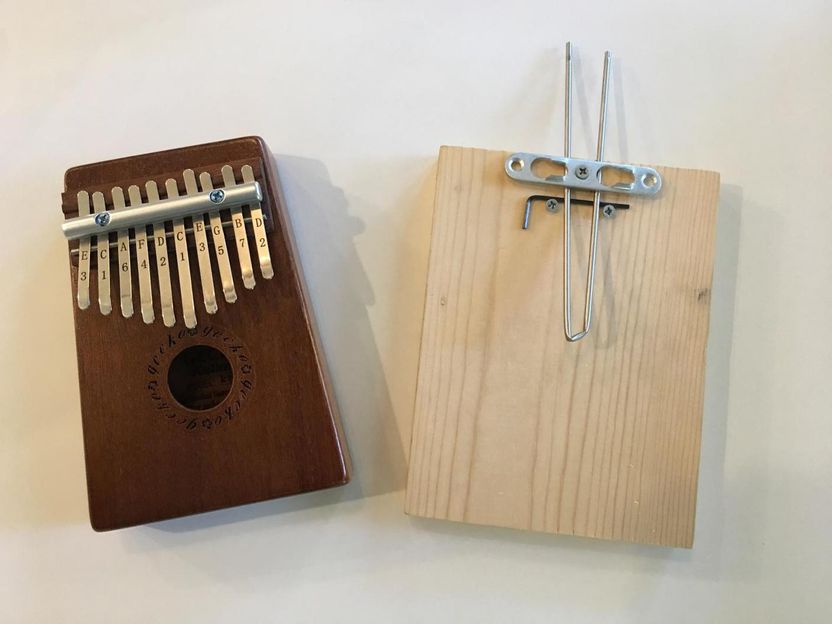
Musical sensor shows bad medicine plays false note - Inspired by a musical instrument, the simple sensor can be constructed from common materials and used to detect adulterated or counterfeit drugs
PerkinElmer and University of Copenhagen Announce Licensing Agreement for New Maternal Health Marker ADAM12
How can we fight blood cancer more effectively? - Several hundred different treatment combinations to be tested simultaneously outside the body
LGC announces plans to expand forensic services with new facilities to be created in Runcorn, Cheshire
Synthetic Production of Potential Pharmaceuticals Dramatically Simplified by Scripps Research Team - Findings Could Expand Interest in Natural Products by Making Production More Cost-Effective
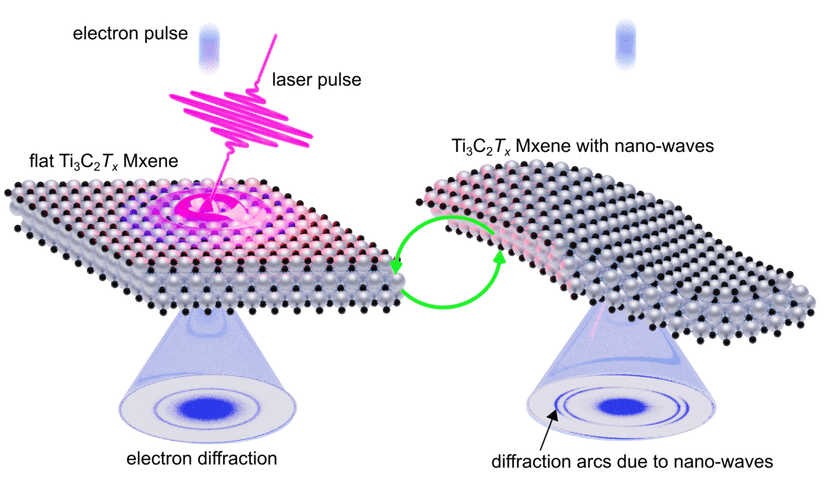
Light-induced shape shifting of MXenes - Femtosecond light creates switchable nano-waves in MXenes and moves the materials’ atoms at a record-breaking speed
Brooks Instrument Joins Major Biotechnology Consortium Focused on Regenerative Drug Manufacturing - Brooks Instrument will contribute insights and precision fluid control technology to the Advanced Regenerative Manufacturing Institute’s BioFabUSA program
Promising discovery for a non-invasive early detection of Alzheimer's disease
Innovations through hair-thin optical fibres - Study shows what miniaturised optical filters make possible