Ebolaviruses need very few mutations to cause disease in new host species
Kent researchers have identified how few mutations it can take for Ebolaviruses to adapt to affect previously resistant species.
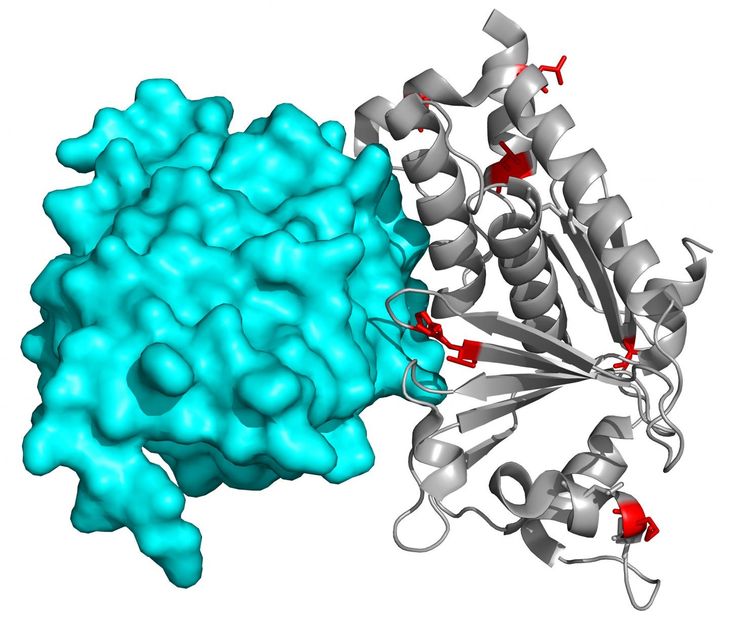
Ebolavirus Protein VP24 is illustrated.
University of Kent
Ebola is one of the world's most virulent diseases, though rodent species such as guinea pigs, rats and mice are not normally susceptible to it. However, through repeated infection of a host animal, Ebola virus strains can be generated that replicate and cause disease within new host rodent species.
Scientists in the University of Kent's School of Biosciences examined the changes associated with Ebolavirus adaptation to rodents including guinea pigs and mice across four different studies. They found that only very few mutations, probably fewer than five, are required for the virus to adapt.
In particular, a change in the Ebolavirus protein VP24 seems to be critical for Ebola viruses to infect a new animal species. Ebolaviruses infecting domestic species, including pigs and dogs, may also result in virus changes that may increase the risk to humans. Reston viruses, Ebolaviruses that have not been shown to cause disease in humans, so far, are known to circulate in domestic pigs in Asia.
The research was performed by Dr Mark Wass (Senior Lecturer in Computational Biology), Professor Martin Michaelis (Professor of Molecular Medicine), and Dr Jeremy Rossman (Senior Lecturer in Virology) and members of their research groups.
Original publication
Other news from the department science

Get the analytics and lab tech industry in your inbox
By submitting this form you agree that LUMITOS AG will send you the newsletter(s) selected above by email. Your data will not be passed on to third parties. Your data will be stored and processed in accordance with our data protection regulations. LUMITOS may contact you by email for the purpose of advertising or market and opinion surveys. You can revoke your consent at any time without giving reasons to LUMITOS AG, Ernst-Augustin-Str. 2, 12489 Berlin, Germany or by e-mail at revoke@lumitos.com with effect for the future. In addition, each email contains a link to unsubscribe from the corresponding newsletter.
Most read news
More news from our other portals
Last viewed contents
Carbon Nanotubes: Endless Opportunities
Sartorius expects profitable growth in 2024 - Double-digit annual sales revenue growth projected through to 2028
A Close Look at Lithium Batteries - Fluorescence probe shows the distribution of active lithium species on lithium metal anodes


Scientists glimpse nanobubbles on super non-stick surfaces - Could lead to design of water-shedding materials for applications in energy, medicine and more
Pharmacoscopy: Next-Generation Microscopy - New possibilities for drug discovery
Cellphone converts into powerful chemical detector - With only $50 worth of components, an ordinary cellphone transforms into a sophisticated scientific instrument, capable of identifying chemicals, drugs, and pathogens
Portable lab analysis: mini spectrometer integrated into your mobile phone
PANalytical announced the opening of its new Regional Application Laboratory in Shanghai, China
Henry Ford's idea revisited in DNA copying