Identifying Another Piece in the Parkinson's Disease Pathology Puzzle
International Consortium Identifies and Validates Cellular Role of Priority Parkinson’s Disease Drug Target, LRRK2 Kinase
An international public-private research consortium has identified and validated a cellular role of a primary Parkinson’s disease drug target, the LRRK2 kinase. This important finding illuminates a novel route for therapeutic development and intervention testing for Parkinson’s, the second most common neurodegenerative disease after Alzheimer’s.
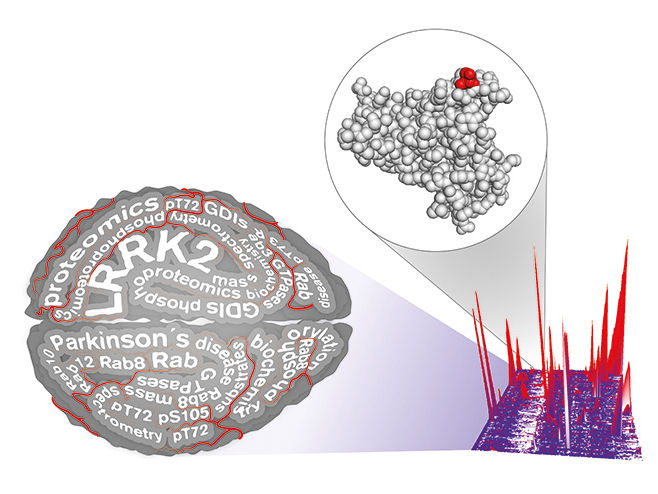
Parkinson’s researchers used proteomics to identify Rab proteins as a physiological substrate of LRRK2, a Parkinson’s drug target. This finding may accelerate current research and open a novel therapeutic avenue.
Steger, Krause © Max Planck Institute of Biochemistry
A team of investigators from the Max Planck Institute of Biochemistry, the University of Dundee, The Michael J. Fox Foundation for Parkinson’s Research (MJFF), GlaxoSmithKline (GSK) and MSD contributed unique tools and expertise toward rigorous systematic testing that determined the LRRK2 kinase regulates cellular trafficking by deactivating certain Rab proteins (3, 8, 10 and 12).
Mutations in the LRRK2 gene are the greatest known genetic contributor to Parkinson’s disease. Pharmaceutical companies are developing LRRK2 kinase inhibitors to correct the effects of those mutations and treat Parkinson’s disease. This new breakthrough finding that links mutant LRRK2 to inappropriate deactivation of Rab function unlocks more than 20 years of accumulated knowledge of the roles of Rab proteins. This knowledge can now be integrated to significantly improve our understanding of LRRK2 dysfunction in the Parkinson’s disease process.
“The pathological cascade leading to brain diseases such as Parkinson’s likely includes many cellular players,” said Matthias Mann, PhD, Director of the Department of Proteomics and Signal Transduction at the Max Planck Institute of Biochemistry. “The identification of this LRRK2 substrate gives us a central piece in this puzzle and another potential place to intervene in the disease process.”
Marco Baptista, PhD, MJFF Senior Associate Director of Research Programs, said, “Identification of Rab proteins as a LRRK2 substrate presents a tool to measure the impact of these inhibitors not only on LRRK2 levels but also on LRRK2 function. This critical component will advance development of these therapies to slow or stop Parkinson’s disease, patients’ greatest unmet need.”
This MJFF-led consortium used a combination of tools in the discovery, including a knock-in mouse model of the most common LRRK2 mutation strongly associated with Parkinson’s (created by GSK), a second knock-in LRRK2 mouse model generated by MJFF, LRRK2 kinase inhibitors from GSK and Merck, and state-of-the-art mass spectrometry. These tools — and the collaborative spirit that united the partners — were necessary to make this finding.
“This unique model of collaboration and our systematic approach across laboratories using advanced technologies and layers of confirmation provide a firm foundation from which to continue this line of investigation and further refine our understanding of the LRRK2 Rab relationship,” said Dario Alessi, PhD, Director of the Protein Phosphorylation and Ubiquitylation Unit at the University of Dundee.
With additional MJFF funding, this research group now is working to further characterize the Rab proteins modified by LRRK2 and to understand how an imbalance in cellular trafficking leads to the degeneration of neurons seen in Parkinson’s disease.
Other news from the department science








Most read news



More news from our other portals



















See the theme worlds for related content
Topic World Mass Spectrometry
Mass spectrometry enables us to detect and identify molecules and reveal their structure. Whether in chemistry, biochemistry or forensics - mass spectrometry opens up unexpected insights into the composition of our world. Immerse yourself in the fascinating world of mass spectrometry!

Topic World Mass Spectrometry
Mass spectrometry enables us to detect and identify molecules and reveal their structure. Whether in chemistry, biochemistry or forensics - mass spectrometry opens up unexpected insights into the composition of our world. Immerse yourself in the fascinating world of mass spectrometry!
Last viewed contents
Researchers develop sensors for the “charge” of biological cells - Biosensors show the ratio of NADPH to NADP⁺ in living cells in real time for the first time
CSHL scientists harness logic of 'Sudoku' math puzzle to vastly enhance genome-sequencing capability - 'DNA Sudoku' pools multitude of DNA samples for sequencing in manner analogous to solving a Sudoku grid
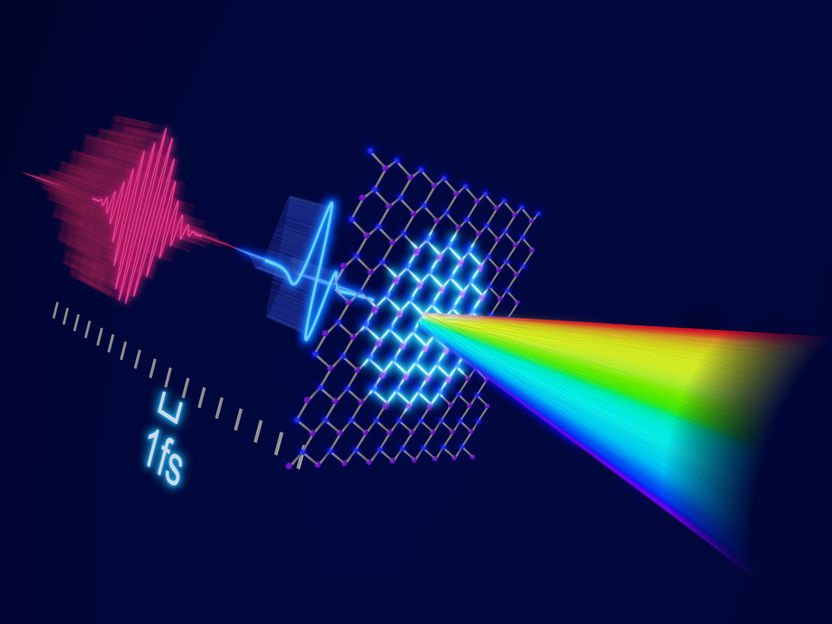
High harmonics illuminate the movement of atoms and electrons - Detailed new insights into atomic motions
Resistance to the anti-cancer medication cetuximab - Insights into mechanisms
Zoom in to watch DNA code being read
New technology to study virus infections - "It may be possible to rapidly address emerging pandemics in the future by tailoring our tool to recognize novel viral strains"
New test opens path for better 2-D catalysts
Nanobiosensor Developed for Detecting SARS-CoV-2 - New sensor technology breakthrough against the pandemic
DNA from extinct humans discovered in cave sediments - New method retrieve hominin DNA from cave sediments – even in the absence of skeletal remains
Researchers have succeeded for the first time in analyzing nanovesicles and proteins in parallel - This is important to determine the quality of a sample and to clearly attribute effects to the transport vesicles
Physicists create giant trilobite molecules - Results are important to understand the chemical binding mechanisms of them, which is distinct from all other chemical bonds