Can AI replace conventional bacterial testing in the food industry?
Deep learning model analyzes digital images of microcolonies and reliably distinguishes between pathogens and microscopic food residues
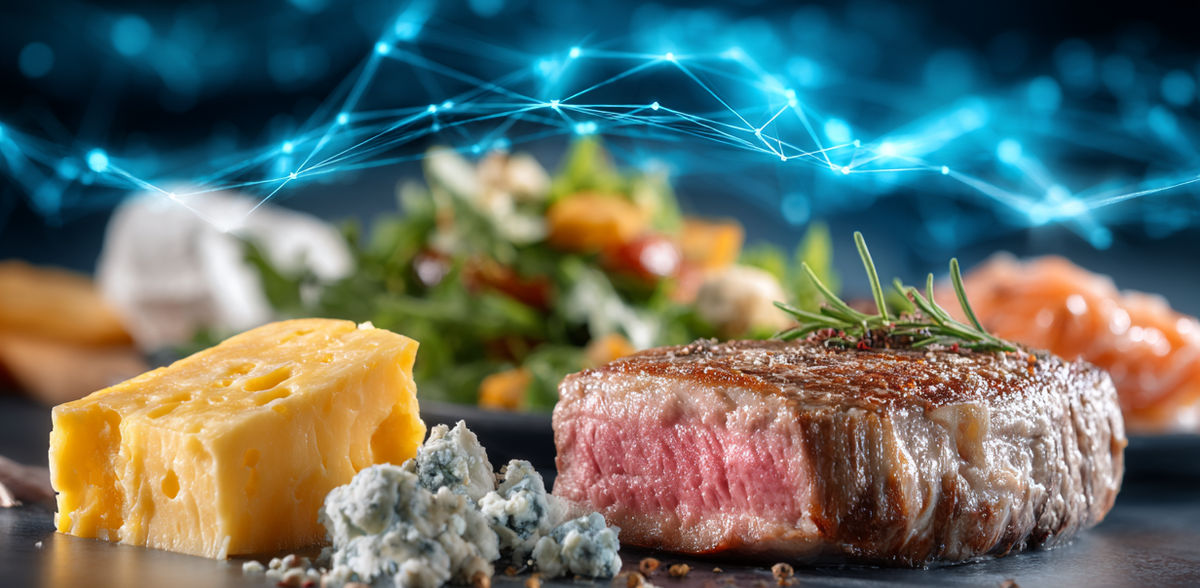
Researchers have significantly enhanced an artificial intelligence tool used to rapidly detect bacterial contamination in food by eliminating misclassifications of food debris that looks like bacteria.
Current methods to detect contamination of foods such as leafy greens, meat and cheese, which typically involve cultivating bacteria, often require specialized expertise and are time consuming — taking several days to a week.
Luyao Ma, an assistant professor at Oregon State University, and her collaborators from the University of California, Davis, Korea University and Florida State University, have developed a deep learning-based model for rapid detection and classification of live bacteria using digital images of bacteria microcolonies. The method enables reliable detection within three hours.
Their latest breakthrough involves training the model to distinguish bacteria from microscopic food debris to improve its accuracy. A model trained only on bacteria misclassified debris as bacteria more than 24% of the time. The enhanced model, trained on both bacteria and debris, eliminated misclassifications.
Bacterial contamination can arise throughout food production from farms to processing facilities and occur via sources such as animals, irrigation water, soil and air. The U.S. Food & Drug Administration estimates 48 million cases of foodborne illness annually, leading to 128,000 hospitalizations and 3,000 deaths.
“Early detection of foodborne pathogens before products reach the market is essential to prevent outbreaks, protect consumer health and reduce costly recalls,” Ma said.
The study, published in npj Science of Food, tested the deep learning model on three bacterial strains — E. coli, listeria and Bacillus subtilis — and food debris from chicken, spinach and Cotija cheese. Researchers are now working to optimize the AI system for industry adoption.
Original publication
Other news from the department science













Most read news






More news from our other portals



























Last viewed contents
Biocartis collaborates with Philips and Wellcome Trust in oncology diagnostics - Collaboration to develop an automated blood based assay-system for monitoring tumor load
Mettler-Toledo's TDL Analyzers Receive Award from Frost & Sullivan for Competitive Strategy Innovation & Leadership
Lab21 Announces Positive Results for Aspergillus Detection in Critical Care and Haematology Patients
‘Two in a row’ as Malvern Instruments wins Queen’s Award for second year in succession
High-end Microscopy Refined - New details are known about an important cell structure
Abbott Receives FDA Emergency Use Authorization and Launches Test to Detect Novel Coronavirus - Company scaling up production at its U.S. manufacturing location

Better Basics Laborbedarf wins “Best of Industry Award 2024” - “SmartIntegrate” Product Line wins in the Laboratory and Analytical Technology Category
Agilent Technologies Board of Directors elects Koh Boon Hwee as new chairman
Reinnervate expands its distribution network for alvetex across Europe
Genzyme Announces Agreement to Sell Genetic Testing Business to LabCorp
Seegene and Molzym partner on automated molecular sepsis diagnostics