Not humans or robots, but humans and robots
A perspective for AI-driven self-controlled laboratories of the future
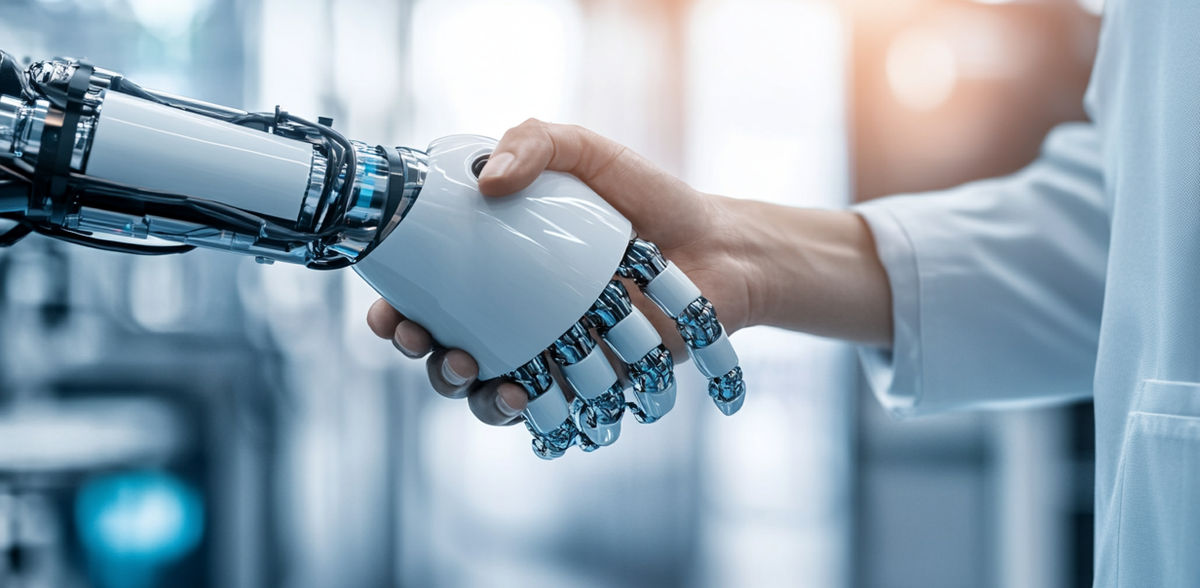
The urgent need for a transition to sustainable energy sources demands a significant acceleration of traditional research and development cycles. Self-driving labs (SDLs), powered by artificial intelligence (AI), could play a pivotal role in this transformation. In a perspective paper in the renowned journal Nature Catalysis, researchers from the Theory Department at the Fritz Haber Institute discuss the role played by humans in future such self-driving labs for catalysis research.
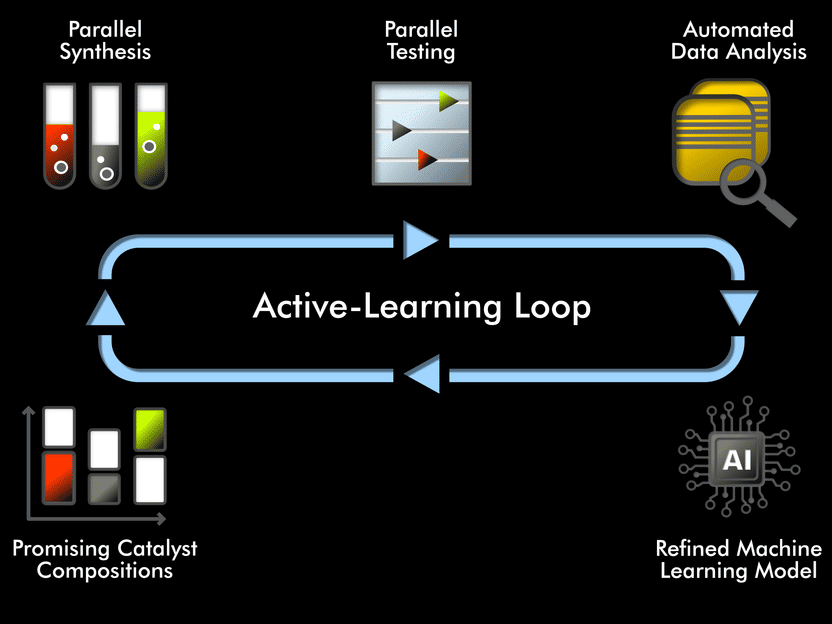
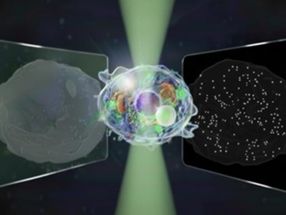
Active-Learning Loop
© Steffen Kangowski/FHI
A self-driving laboratory integrates AI with lab automation and robotics. The AI plans experiments, which are executed in increasingly automated (robotized) modules. In practice, this process occurs in active learning loops, where the data from the last loop is used to refine a machine learning model. The AI then uses this model to plan the subsequent experiments in the next loop. This way, only those syntheses, characterizations and tests are conducted that are most informative on the basis of all prior collected data. Simultaneously, the automation enhances throughput, reproducibility, and safety – promising a significant acceleration compared to traditional human-led development processes.
In early implementations of this innovative concept for discovering improved catalyst materials, the focus often lies on replacing human tasks with synthesis robots. Dr. Scheurer and Prof. Reuter instead emphasize that the most time-consuming step of such type of catalysis research is typically the explicit testing of the materials. Given the increasing importance of sustainability, the degradation behavior of the materials in the reactor must be monitored over long times. Therefore, throughput improvements are more likely to be achieved by developing new testing procedures specifically designed for SDLs, rather than merely automating existing procedures.
Especially when throughput remains limited, the AI's role in experiment planning is crucial. The fewer loops need to be executed, the better. Also here, humans will continue to play a vital role for the foreseeable future. While current AIs can determine optimal experiments within a given overall framework, they cannot yet question this framework or even redefine the scientific questions themselves. For the time being, these creative tasks remain the domain of humans, necessitating a human control function within the loops.
The authors thus advocate the "human-in-the-loop" principle and analyze its implications for AI development in SDLs. Not least, the AIs must be capable of responding flexibly, robustly, and assessably to human modifications of the loop structures—a methodological challenge currently already addressed by ongoing research in the Theory Department.
Original publication
Other news from the department science




Most read news


More news from our other portals
















See the theme worlds for related content
Topic world Digitalization in the laboratory
The topic world Digitalization in the lab presents innovations and trends from digital data systems (ELN, LIMS) to laboratory robots and networked devices (IoT) to AI and machine learning.

Topic world Digitalization in the laboratory
The topic world Digitalization in the lab presents innovations and trends from digital data systems (ELN, LIMS) to laboratory robots and networked devices (IoT) to AI and machine learning.
Last viewed contents
A milestone on the pathway to Lab 4.0: A new standard for the smart lab - SPECTARIS presents the first industrial communication standard for laboratory and analytical devices

Fish and seafood - improved trace detection of life-threatening allergy sources - "AQUALLERG-ID": Researchers develop methods for detecting potential food allergens
PerkinElmer appoints President & Chief Operating Officer
ECHA calls for information to avoid unneccessary animal testing
Newly improved NIST reference material targets infant formula analysis

LAUDA appoints Dr. Ralf Hermann as the new General Manager Constant temperature equipment
A relative from the Tianyuan Cave - Ancient DNA has revealed that humans living some 40,000 years ago in the area near Beijing were likely related to many present-day Asians and Native Americans
Measurable for the first time: How bio molecules react to lack of space - Sensor demonstrates lack of space in living cells
Using AI to identify genetic perturbations from cell images - Newly founded start-up aims to use findings to treat previously incurable fibrosis