Deadly chicken disease: ancient DNA reveals evolution of virulence
Using genetic analyses, an international team has revealed the evolutionary history of the pathogen of a fatal disease in chickens
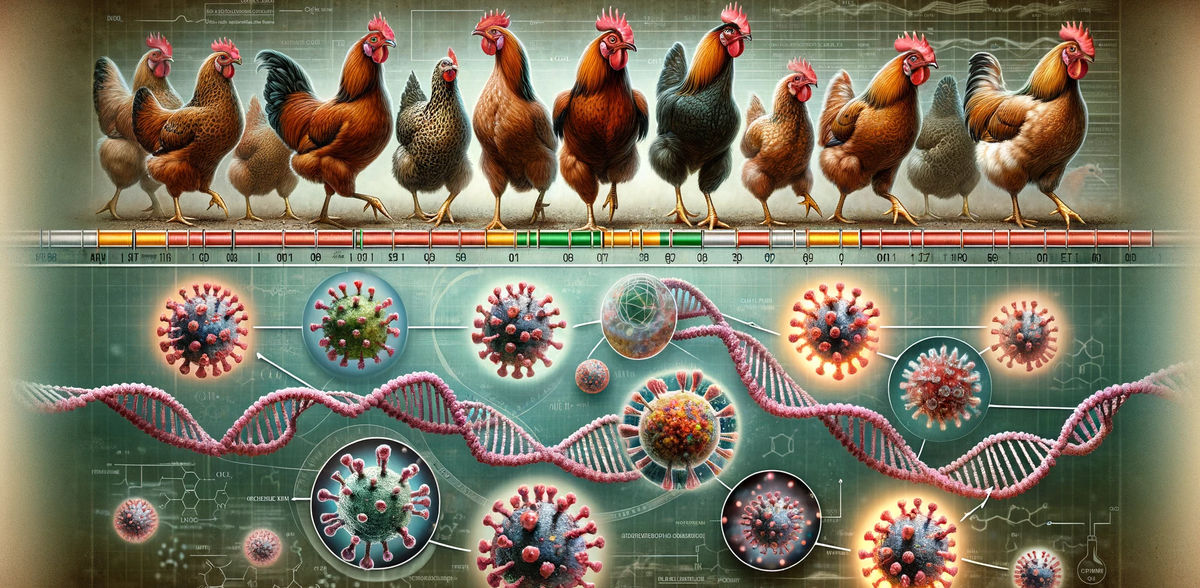
A notifiable animal disease in Germany, Marek’s disease is caused by the globally distributed Marek’s disease virus (MDV). Over the past century, the virus, which causes tumors in chickens and has a high mortality rate, has become increasingly aggressive. Combating the disease costs the poultry industry over a billion dollars every year. With the help of ancient DNA, an international team of scientists led by LMU paleogenomicist Professor Laurent Frantz and Professor Greger Larson and Professor Adrian Smith from the University of Oxford has now decoded the evolution of MDV and shed light on what is behind the growing virulence.
The international team from the fields of paleogenetics, archeology, and biology isolated viral genomes from chicken bones up to 1,000 years old from 140 archeological sites in Europe and the Near East. “Our data shows that the virus was already widely distributed at least 1,000 years before the first description of the disease in 1907,” says Frantz. When the disease was first described, it was said to produce only mild symptoms in older chickens. With the dramatic increase in poultry farming in the 1950s and 1960s, the virus evolved and has become increasingly virulent despite the development of several vaccines.
Ancient strains of virus probably did not cause tumors
By means of comparisons with the viral genomes of modern birds, the researchers identified mutations in multiple genes that probably determine the severity of the infection and are related to the increase in virulence. One of these viral genes – Meq – is responsible for tumor formation. By testing ancient and modern forms of the Meq gene using cell cultures, the researchers demonstrated that the ancient form was less aggressive than the modern one. Indeed, they suspect that the ancient strains of the virus were unable to cause tumors.
The authors hypothesize that the increasing virulence is partly attributable to the growth in the global chicken population since the 1950s, prompting the number of new mutations to increase accordingly. In addition, they think that the use of certain vaccines which prevent symptomatic infection but do not stop transmission of the virus has probably accelerated the evolution of the virulence.
“Our findings not only unravel the evolutionary history of the Marek's Disease Virus but also provide a foundation for enhancing our current understanding of pathogen virulence,” says lead author Steven Fiddaman from the University of Oxford. “By combining ancient DNA techniques with modern genomics, we've opened a window into the past that can guide future strategies in managing viral diseases.”
Original publication
Other news from the department science











Most read news




More news from our other portals






















Last viewed contents

In search of the 'holy grail': researchers observe lithium ions in real time - Tracking lithiation with transmission electron microscopy: A decisive step in research on battery materials

Changes to Executive Board of Carl Zeiss AG - Dr. Ludwin Monz will be stepping down from his position as President and CEO of the Executive Board of Carl Zeiss Meditec AG at his own request
Breakthrough in protein research: Toolkit makes protein design faster and more accessible - What used to take weeks can now be completed in a day or less

DNA analysis reveals risk of post-meal insulin resistance - Targeted intervention may be possible
OGT Grants DNA Sequence Variation Licence to Biotype Diagnostics GmbH
New Method for Analysing Nanoporous Materials - Innovative method opens up new possibilities for materials science

A milestone on the pathway to Lab 4.0: A new standard for the smart lab - SPECTARIS presents the first industrial communication standard for laboratory and analytical devices

Fish and seafood - improved trace detection of life-threatening allergy sources - "AQUALLERG-ID": Researchers develop methods for detecting potential food allergens
PerkinElmer appoints President & Chief Operating Officer
ECHA calls for information to avoid unneccessary animal testing
Newly improved NIST reference material targets infant formula analysis
