New device quickly detects harmful bacteria in blood
Tiny device could help professionals diagnose and fight deadly infections
Engineers have created a tiny device that can rapidly detect harmful bacteria in blood, allowing health care professionals to pinpoint the cause of potentially deadly infections and fight them with drugs.
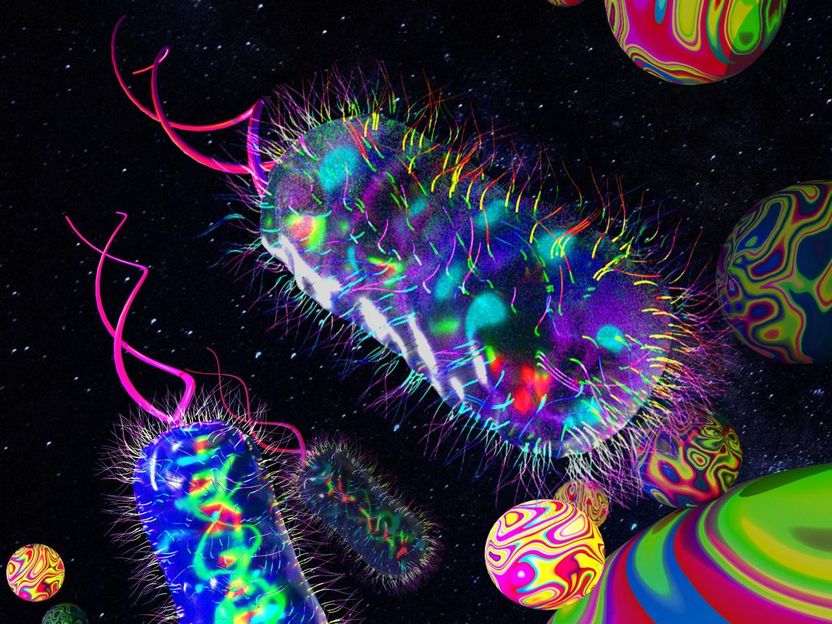
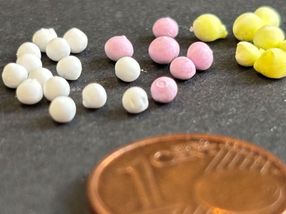
This image shows bacterial cells trapped in a 3D microbead matrix.
Wenrong He/Rochester Institute of Technology.
"The rapid identification of drug-resistant bacteria allows health care providers to prescribe the right drugs, boosting the chances of survival," said coauthor Ruo-Qian (Roger) Wang, an assistant professor in the Department of Civil and Environmental Engineering in the School of Engineering at Rutgers University-New Brunswick.
Drug-resistant bacteria, or super-bugs, are a major public health concern. Globally, at least 700,000 people die each year as a result of drug-resistant infections, including 230,000 deaths from multidrug-resistant tuberculosis. That number could soar to 10 million deaths a year by 2050 if no action is taken, according to a 2019 report.
Based on a new approach, the tiny new device rapidly isolates, retrieves and concentrates target bacteria from bodily fluids. It efficiently filters particles and bacteria, capturing about 86 percent of them. The nano-device has magnetic beads of different sizes that are designed to trap, concentrate and retrieve Escherichia coli (E. coli) bacteria. The small spaces between the beads are used to isolate bacteria in the device.
The inexpensive, transparent device is easy to fabricate and operate, making it ideal for detecting disease-causing organisms in laboratory and health care settings, according to the study. The research team is working to perfect the device and plans to add multiple devices onto a small chip and explore scaling up testing in the field.
Original publication
Other news from the department science








Most read news








More news from our other portals
























See the theme worlds for related content
Topic world Diagnostics
Diagnostics is at the heart of modern medicine and forms a crucial interface between research and patient care in the biotech and pharmaceutical industries. It not only enables early detection and monitoring of disease, but also plays a central role in individualized medicine by enabling targeted therapies based on an individual's genetic and molecular signature.
Topic world Diagnostics
Diagnostics is at the heart of modern medicine and forms a crucial interface between research and patient care in the biotech and pharmaceutical industries. It not only enables early detection and monitoring of disease, but also plays a central role in individualized medicine by enabling targeted therapies based on an individual's genetic and molecular signature.