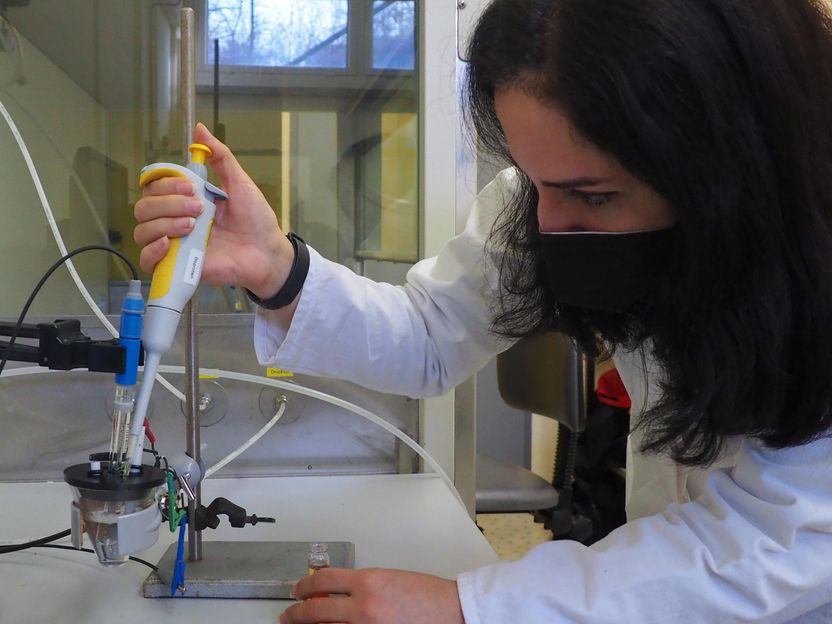
Virtual screening for active substances against the coronavirus
The University of Basel is part of the global search for a drug to fight the rampant coronavirus. Researchers in the Computational Pharmacy group have so far virtually tested almost 700 million substances, targeting a specific site on the virus – with the aim of inhibiting its multiplication. Due to the current emergency, the first results of the tests will be made available to other research groups immediately.

Researchers have tested more than 680 million substances on the computer to virtually test one of the virus’ important proteins, the central protease.
University of Basel, Computational Pharmacy
Over the past few weeks, the research group in the Department of Pharmaceutical Sciences, led by Professor Markus Lill, has been working with computer-aided methods to identify possible new drugs to combat the current coronavirus outbreak and similar epidemics in the future. In the process, the researchers have tested, albeit virtually, more than 680 substances on one of the virus’s key proteins: its central protease.
This “virtual screening” has already identified several interesting substances that have the potential to inhibit the virus’s critical enzyme – and thus its further multiplication. “Even if the complete development of a drug to fight this particular coronavirus is likely to exceed the duration of the current epidemic, it is important to develop drugs for future coronaviruses. This will make it possible to nip health crises like this one in the bud in the future,” says Lill.
Test results made public
In light of the current crisis, the group took an unusual decision by immediately making the test results publicly available in the form of an open-source preprint. The publication was consulted more than 3,000 times during the first 48 hours alone.
The Basel researchers hope that a larger number of research groups worldwide will test their proposals on the virus and initiate further trials. Normally, when it comes to drug design, the molecules of interest would be experimentally tested with other groups before the results were patented and published. The main focus of other ongoing coronavirus trials is currently on the usability of existing antiviral drugs or the realignment of other drugs.
Original publication
André Fischer, Manuel Sellner, Santhosh Neranjan, Markus A. Lill, and Martin Smiesko; "Inhibitors for Novel Coronavirus Protease Identified by Virtual Screening of 687 Million Compounds"; ChemRxiv; 2020
Other news from the department science














Most read news






More news from our other portals



























Last viewed contents

Blood-based test accurately identifies viral infection before symptoms develop - The study, conducted prior to COVID-19, has broad potential for pandemic responses
'Sifting' liquid at the molecular level - Drexel University engineers develop method for using nanotubes to separate liquids
Fastest sensor for heat flow tested - Relevant for alternative fuels and hydrogen
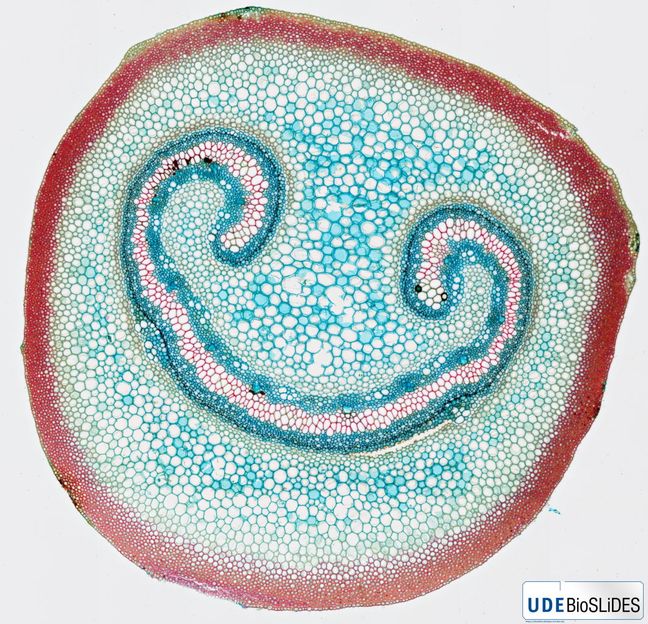
Online Microscopy Platform: See-through for Everyone! - One can focus through the high-resolution specimens just like on a microscope, in order to see details in sharp focus that are located in different layers
Research under high pressure - Why 3,000 bars are needed to take a comprehensive look at a protein
New algorithm sharpens focus of world's most powerful microscopes - Scientists develop a technique that improves the resolution of cryo-electron microscopy

Using ions to find molecules - Physicists use a single trapped ion to detect ultracold molecules
Novasep appoints two key executives - Stephen Stefano heads up Novasep North American business and Patrick Glaser leads Novasep Synthesis division
DKSH extends partnership with Bruker in China - Distribution agreement to expand coverage for Bruker’s 3D X-ray Microscopy product portfolio for non-destructive imaging technology

Individual protein complex generates electric current - Solar cell consisting of a single molecule
Perten Instrument forms fully owned subsidiary in China