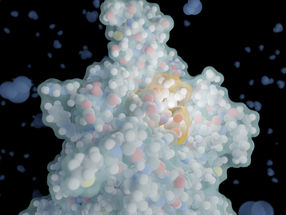
Structure of Human Cytochrome P450 2D6 solved by GlaxoSmithKline with the use of Fludigm Technology

21-Mar-2006

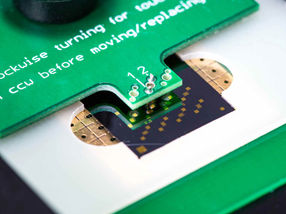
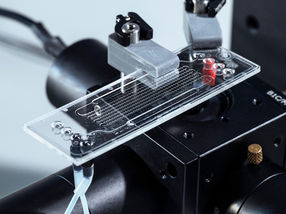
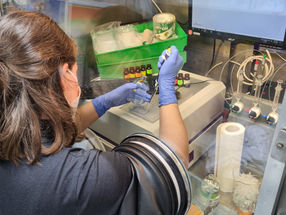
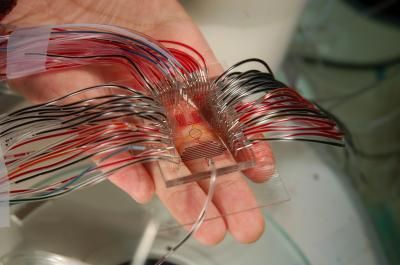
The TOPAZ® system for protein crystallization was instrumental in helping GlaxoSmithKline (GSK) solve the structure of cytochrome P450 2D6, an enzyme important in the metabolism of a wide variety of drugs. TOPAZ crystallization chips were used to identify positive conditions for crystallization and subsequently to grow P450 2D6 crystals sufficiently large and well ordered for structural analysis. The research was conducted by the GSK Discovery Research Group in Harlow, UK, and the findings are presented in the Journal of Biological chemistry.

For this protein target, conventional microplate crystallization trials failed to yield crystals suitable for an X-ray crystal structure determination, according to Paul Rowland, Investigator, Structural Sciences at GSK. Consequently, the team turned to TOPAZ preparative chips to further explore crystallisation conditions and to scale up those which appeared promising. In the paper Rowland et al. describe the procedure whereby crystals were grown and harvested from the TOPAZ chips and then used to solve the protein structure.

The P450 2D6 structure is a milestone in ongoing work to determine the structures of various bound substrates and inhibitors related to ligand recognition and specificity in human cytochrome systems. A relatively large number of genetic polymorphisms have been described for 2D6, some of which are markers for rapid, or conversely, very poor metabolism. A deeper understanding of these polymorphisms as facilitated by 3-dimensional structural considerations may lead to safer, more efficacious drugs. The publication of the P450 2D6 structure attests to the value of a long-standing collaboration between GSK and Fluidigm to integrate TOPAZ technology into the drug discovery process.
Other news from the department research and development

Most read news

More news from our other portals

Last viewed contents

Water: Finding the normal within the weird

Water: Finding the normal within the weird

A relative from the Tianyuan Cave - Ancient DNA has revealed that humans living some 40,000 years ago in the area near Beijing were likely related to many present-day Asians and Native Americans

A relative from the Tianyuan Cave - Ancient DNA has revealed that humans living some 40,000 years ago in the area near Beijing were likely related to many present-day Asians and Native Americans

Quick test to detect inflammation in diabetic patients developed

Scientists capture electron transfer image in electrocatalysis process - In-situ electrochemical imaging method with nanoscale spatial resolution combined atomic force microscopy and scanning electrochemical imaging

Scientists capture electron transfer image in electrocatalysis process - In-situ electrochemical imaging method with nanoscale spatial resolution combined atomic force microscopy and scanning electrochemical imaging

DKSH exclusively distributes Postnova Analytics’ Field-Flow Fractionation systems - DKSH and Postnova Analytics have signed an exclusive distribution agreement for Malaysia, Singapore, Thailand and Vietnam

Structure of ATPase, the world’s smallest turbine, solved - Location of the permeability transition pore found

Structure of ATPase, the world’s smallest turbine, solved - Location of the permeability transition pore found

A new quantum component made from graphene - For the first time, ETH Zurich researchers have been able to make a superconducting component from graphene that is quantum coherent and sensitive to magnetic fields
FlowSyn and FlowSyn Maxi | Flow reactors | Uniqsis

FlowSyn and FlowSyn Maxi | Flow reactors | Uniqsis

Using neutrons to peer inside a battery designed for hybrid locomotives - Study is a collaboration between General Electric and Technische Universitaet Muenchen

Automated anatomic pathology labs transform global tissue diagnostics market - Offering attractive procurement strategies will boost adoption of high-end tools

Highly sensitive gas sensors for volatile organic compound detection

Highly sensitive gas sensors for volatile organic compound detection

How rough microparticles can cause big problems

How rough microparticles can cause big problems