QIAGEN and Max Planck Institute for Infection Biology collaborate to develop assay for active TB risk in individuals with latent infection
QIAGEN N.V. and the Max Planck Institute for Infection Biology (MPIIB), Department of Immunology have announced a new collaboration to develop a molecular diagnostic test to assess the risk of an individual with latent tuberculosis (TB) developing active TB disease during their lifetime. Financial terms were not disclosed.
As a follow-up to those who test positive for latent TB, this new test will be designed to enable early treatment before reactivation of the TB disease, when it becomes contagious and causes life-threatening respiratory illnesses and other diseases.
This new molecular reflex assay, which is based on significant research conducted at the MPIIB in Berlin, is expected to be a PCR-based test targeting multiple biomarkers. It will be designed to run on the QIAsymphony modular automation platform and to serve as a reflex test following QIAGEN’s QuantiFERON-TB Gold test, the modern gold standard for detection of latent TB. The kits are not expected to be available before 2013 and will be commercialized by QIAGEN.
During TB infection, changes occur in the transcriptional profiles of immune cells circulating through blood – alterations in gene expression that reflect the body’s immune response and help to distinguish between latent and active disease. The goal of QIAGEN’s collaboration with the MPIIB is to format the most suitable markers from the sets of biomarkers identified by the institute into a molecular assay that can predict susceptibility or resistance to active TB disease in individuals with latent TB.
Both collaborators will cooperate in collecting, analyzing and evaluating data to identify genetic markers that indicate later development of active TB. QIAGEN will be responsible for assay design and manufacturing, while MPIIB will offer access to its marker sets and develop new biosignatures.
Other news from the department science













Most read news




More news from our other portals





















See the theme worlds for related content
Topic World PCR
This groundbreaking and highly versatile molecular technique of PCR allows us to amplify tiny amounts of genetic material on a large scale and analyze them in detail. Whether in medical diagnostics, forensic DNA analysis or research into genetic diseases - PCR is an indispensable tool that gives us deep insights into the world of DNA. Immerse yourself in the fascinating world of the polymerase chain reaction (PCR)!

Topic World PCR
This groundbreaking and highly versatile molecular technique of PCR allows us to amplify tiny amounts of genetic material on a large scale and analyze them in detail. Whether in medical diagnostics, forensic DNA analysis or research into genetic diseases - PCR is an indispensable tool that gives us deep insights into the world of DNA. Immerse yourself in the fascinating world of the polymerase chain reaction (PCR)!
Last viewed contents

World's first toxicology testing strategy without animal testing adopted by OECD - Success for long-standing collaboration between BASF and Givaudan to develop and validate alternative methods
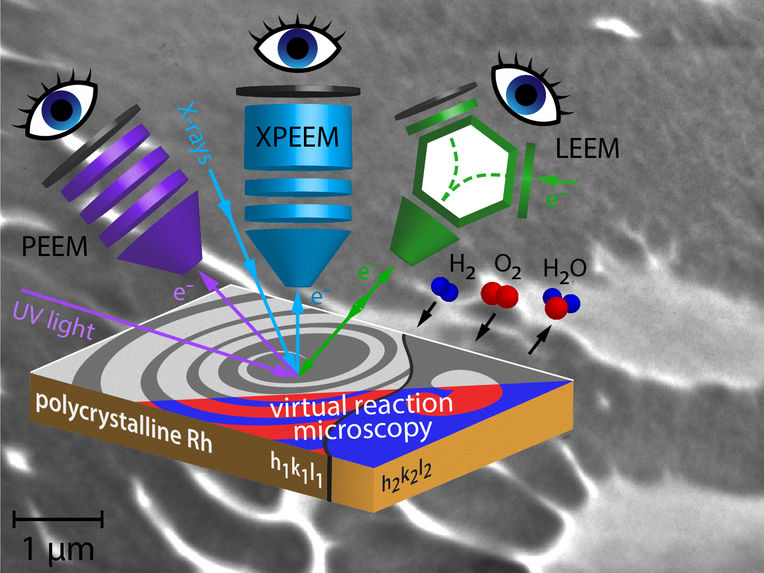
Three Eyes See More than Two - monitoring a catalytic reaction with three different microscopies under exactly the same conditions in real time - Information is obtained that none of the methods alone could reveal

(How) Cells Talk to Each Other - ISTA Scientists Successfully Model Cell Dynamics
NIST sensor improvement brings analysis method into mainstream
Tracking of individual catalyst nanoparticles during heating