Coffee as a Staining Agent Substitute in Electron Microscopy
Researchers have proven that espresso is a favourable alternative to the highly toxic and radioactive uranyl acetate in the analysis of biological samples
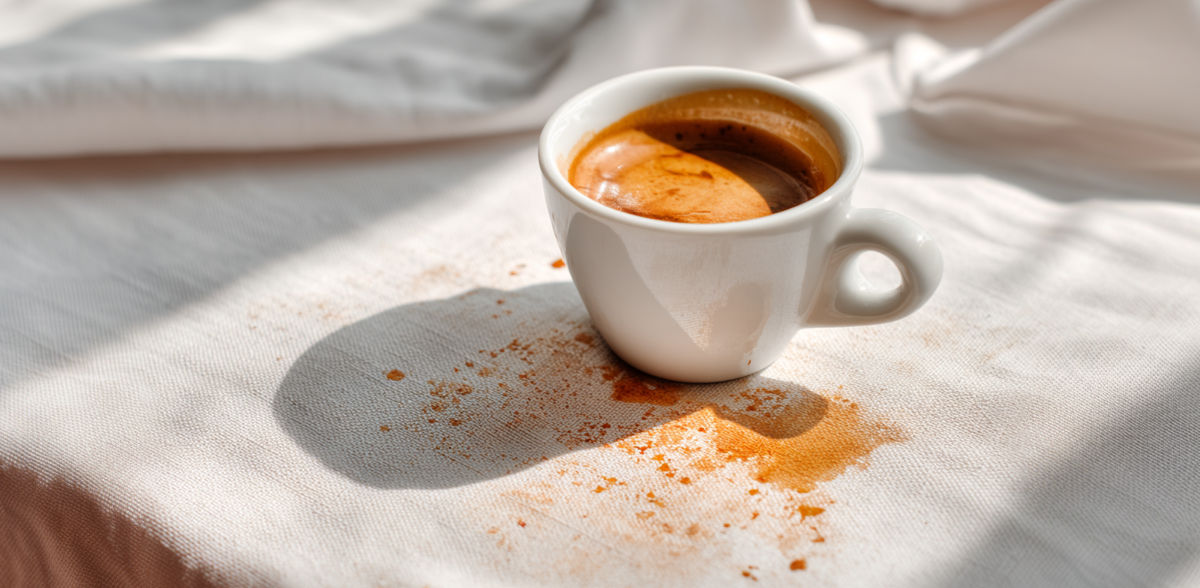
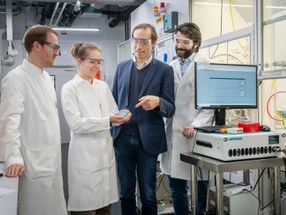
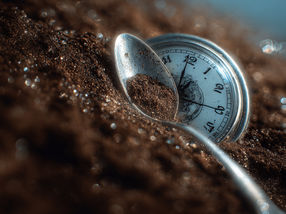
To ensure that the tissue structures of biological samples are easily recognisable under the electron microscope, they are treated with a staining agent. The standard staining agent for this is uranyl acetate. However, some laboratories are not allowed to use this highly toxic and radioactive substance for safety reasons. A research team at the Institute of electron microscopy and Nanoanalysis (FELMI-ZFE) at Graz University of Technology (TU Graz) has now found an environmentally friendly alternative: ordinary espresso. Images of the samples treated with it were of equally good quality as images of comparative samples, which were prepared with uranyl acetate. The researchers have published their findings in the journal Methods.
Coffee stains as inspiration
“I got the idea of using espresso as a staining agent from the circular dried stains in used coffee cups,” says Claudia Mayrhofer, who is responsible for ultramicrotomy at the institute. During preparation, she cuts tissue samples into wafer-thin slices and fixes them onto sample holders. Staining is the last step before examination under the electron microscope. “Initial tests have shown that coffee stains biological samples and enhances contrasts,” says Mayrhofer.
Together with team leader Ilse Letofsky-Papst and graduate student Robert Zandonella, Claudia Mayrhofer investigated how well espresso performs in direct comparison with uranyl acetate. Under identical conditions, they treated ultra-thin sections of mitochondria with various staining agents and assessed the quality of the microscope images using special image analysis software. “Espresso provided comparatively very good contrast values, in some cases they were even better than with uranyl acetate,” explains Claudia Mayrhofer.
Further tests with different tissue types required
Ilse Letofsky-Papst concludes: “Our results show that coffee is a serious alternative to uranyl acetate. However, further investigations on different types of tissues are still required to enable a broad application in life science electron microscopy.”
Original publication
Other news from the department science