New insights into the function of a risk factor for Alzheimer’s disease
Researchers decipher the structure-function relationship of the multifunctional protein clusterin for the first time
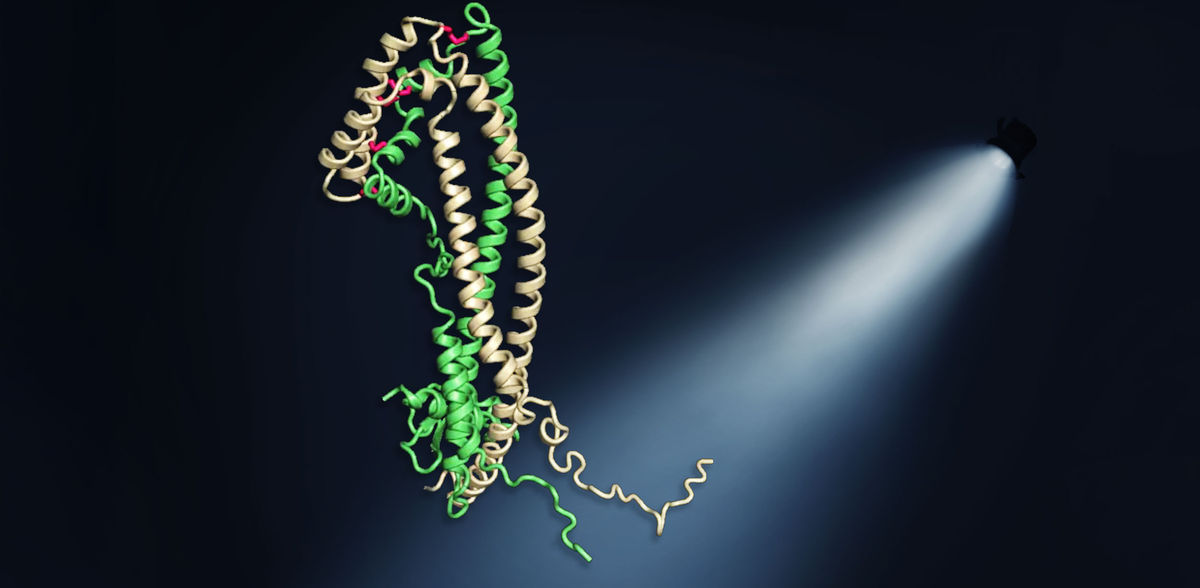
Carriers of clusterin risk alleles have an increased likelihood of developing late-onset Alzheimer's disease (LOAD). In order to better understand the function of the associated protein, researchers at the Max Planck Institute of Biochemistry have deciphered the molecular basis for the chaperone function of clusterin. Clusterin is a glycoprotein found in high concentrations in blood and cerebrospinal fluid that protects cells from the harmful clumping of misfolded proteins. The researchers were able to determine the crystallographic three-dimensional structure of human clusterin for the first time and discovered that two disordered, hydrophobic peptide tails are crucial for the diverse binding and protective functions of clusterin. The findings have now been published in the journal Nature Structural and Molecular Biology.
Late-onset Alzheimer disease (LOAD) is the most common form of dementia, with symptoms appearing after age 65. Since carriers of clusterin risk alleles have an increased likelihood of developing LOAD, the associated clusterin protein is of interest to researchers seeking to better understand the underlying mechanisms.
Structure of clusterin: a key protein against neurodegenerative diseases
A team around Patricia Yuste-Checa, Andreas Bracher and F.-Ulrich Hartl, Director and Head of the Department of Cellular Biochemistry, has now used X-ray crystallography to elucidate the three-dimensional crystal structure of human clusterin for the first time. Knowing how the atoms are arranged in the protein allows conclusions to be drawn about its general mode of action and chaperone function.
The study shows that clusterin is composed of three different domains. Of particular interest are two disordered, hydrophobic peptide tails that give the protein its remarkable versatility. Patricia Yuste-Checa, first author of the study, explains: "The structure of the peptide tails is comparable to that of small heat shock proteins. These are molecular chaperones that prevent protein clumping inside cells, while clusterin functions outside of cells.”
Proteins fulfil a wide variety of functions in cells and must be precisely folded to do so. Incorrect folding can lead to the formation of harmful aggregates – a typical characteristic of many neurodegenerative diseases such as Alzheimer's or Parkinson's. Molecular chaperones such as clusterin play a central role in preventing such misfolding. Clusterin, also known as apolipoprotein J, has been known since the 1980s as an abundantly secreted glycoprotein. However, until now, there has been no detailed understanding of the molecular functioning of this versatile protective protein.
Protection against protein aggregation
"Clusterin acts in the extracellular space: it binds to misfolded proteins, including the aggregation products of amyloid beta, tau, and α-synuclein, which are typical of diseases such as Alzheimer's or Parkinson's and prevents them from aggregating further.”, Patricia Yuste-Checa continues. “In the study, we were able to show that the hydrophobic, i.e., water-repellent, peptide tails of clusterin are essential for the protective function. After we had biotechnologically modified or removed the hydrophobic amino acids in the peptide tails, we lost the chaperone activity, i.e., the protective function against amyloid beta aggregation." Binding to cell surface receptors and the formation of lipoprotein complexes also appears to be mediated by the peptide tails.
Significance for medicine
The new insights into the structure and function of clusterin are medically relevant. Andreas Bracher says: "Numerous functions have been demonstrated for clusterin, initially as a cell aggregation factor, later as an apolipoprotein, inhibitor of the complement system, molecular chaperone, and anti-apoptotic factor. It is known that clusterin binds extracellular amyloid beta plaques and that clusterin levels in cerebrospinal fluid are elevated in Alzheimer's disease. Deciphering the structure and mechanism of clusterin gives us new insights into the extracellular control mechanisms of protein stability and will hopefully be helpful for clinical research and future treatment of neurodegenerative diseases."
Original publication
Other news from the department science