Plants transformed into detectors of dangerous chemicals
Scientists engineer plants to speak in color
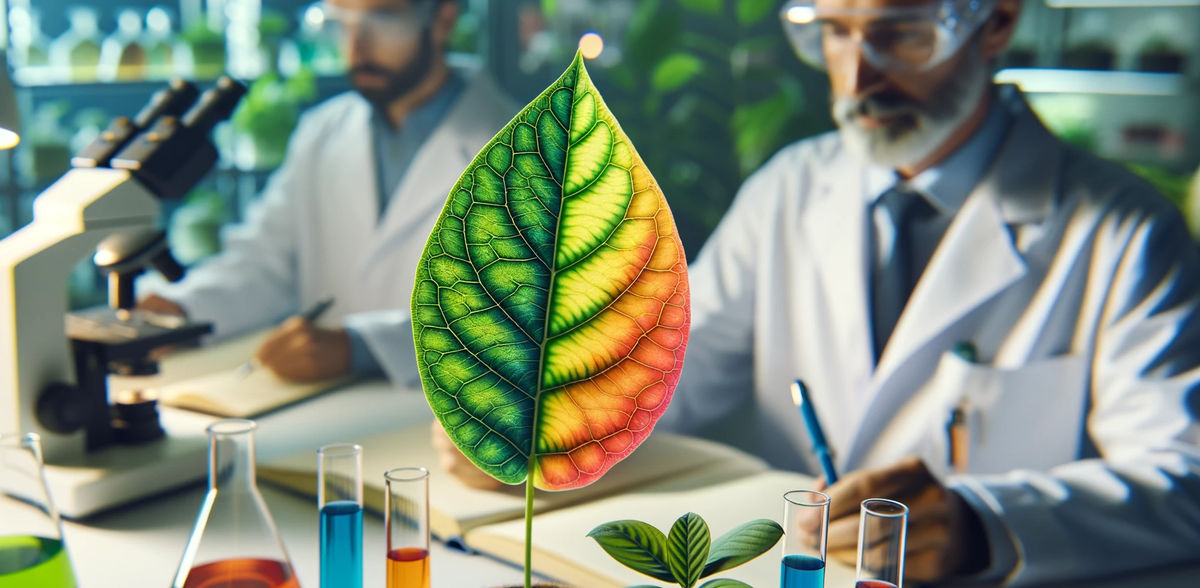
What if your house plant could tell you your water isn’t safe? Scientists are closer to realizing this vision, having successfully engineered a plant to turn beet red in the presence of a banned, toxic pesticide.
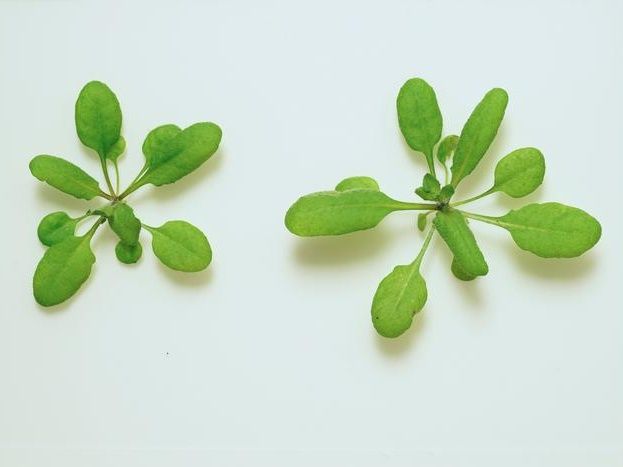
Plants without modifications in the laboratory.
Sean Cutler/UCR
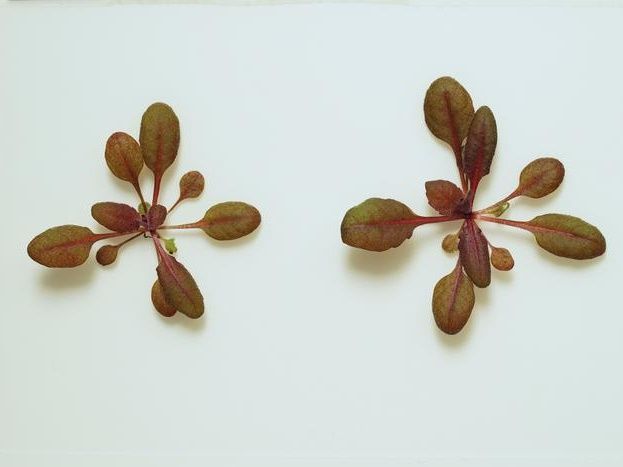
Green plants turn red in the presence of a target chemical.
Sean Cutler/UCR
To achieve this, UC Riverside researchers had to solve an engineering puzzle: how to enable a plant to sense and react to a chemical in the environment without damaging its ability to function normally in all other respects.
“The biggest piece here is we’ve created an environmental sensor without modifying the plant’s native metabolism,” said Ian Wheeldon, associate professor of chemical and environmental engineering at UCR. “Previously, the biosensor component would have messed up the plant’s ability to grow toward light or stop using water when stressed. This won’t.”
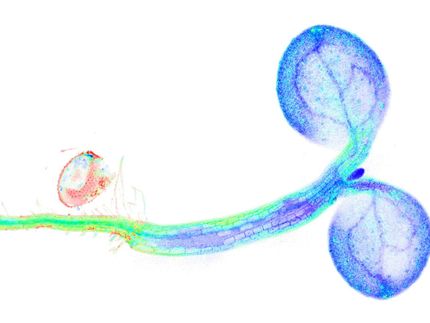
A new paper detailing the chemistry behind the achievement has been published in the journal Nature Chemical Biology. The engineering process begins with a protein called abscisic acid, or ABA, that helps plants acclimate to stressful changes in the environment.
During a drought, soil dries and plants produce ABA. Additional proteins, called receptors, help the plant recognize and respond to ABA. This in turn tells the plant to close pores in its leaves and stems so less water evaporates, and the plant is less likely to wilt.
Last year the research team demonstrated that ABA receptor proteins can be trained to bind to chemicals other than ABA. Now the team has shown that once the receptors bind to this other chemical, the plant will turn beet red.
For this demonstration the team used azinphos-ethyl, a pesticide banned in many places because it is toxic to humans. “People we work with are trying to sense information about chemicals in the environment from a distance,” said Sean Cutler, UCR professor of plant cell biology. “If you had a field of these and they turned red, that would be pretty obvious, visually.”
As part of the same experiment, the research team also demonstrated the ability to turn another living organism into a sensor: yeast. The team was able to show a response in yeast to two different chemicals at the same time. However, this is not yet possible in plants.
“It would be great if we could eventually design one plant to sense 100 banned pesticides, a one-stop shop,” said Cutler. “The more you can stack, the better, especially for applications involving environmental health or defense. But there are limits to what we can engineer for these new sensing capacities at this time.”
To be clear, these plants are not being grown commercially. That would require regulatory approvals that would take many years. It is also a new technology, with a suite of issues that would need to be addressed before it could be used in farmers’ fields, or elsewhere in the real world. However, the discovery opens up possibilities.
“This paper demonstrated a visual response to one chemical in plants. We’re trying to be able to sense any chemical in an environment,” Cutler said. “Other pesticides but also drugs like birth control pills or Prozac in the water supply, things people are worried about being exposed to. These are applications within reach now.”
Original publication
Sang-Youl Park, Jingde Qiu, Shuang Wei, Francis C. Peterson, Jesús Beltrán, Angélica V. Medina-Cucurella, Aditya S. Vaidya, Zenan Xing, Brian F. Volkman, Dmitri A. Nusinow, Timothy A. Whitehead, Ian Wheeldon, Sean R. Cutler; "An orthogonalized PYR1-based CID module with reprogrammable ligand-binding specificity"; Nature Chemical Biology, 2023-10-23
Other news from the department science











These products might interest you