Molecular motion in tire rubber
Tyre components observed with incredible time resolution
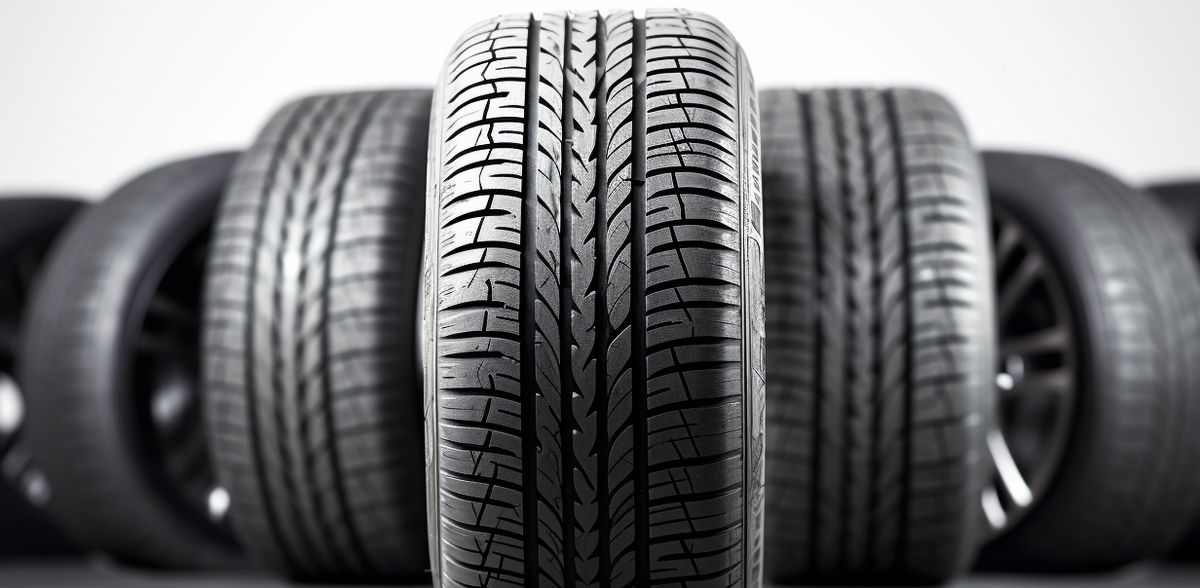
Scientists have observed the molecular motion of rubber components typically used in automobile tires—polybutadiene and carbon black—with the world’s fastest time resolution. The study reveals a clear interaction between the two components on the atomic scale, paving the way towards improved diagnostics of tire rubber degradation and the development of materials with enhanced durability.
Tire rubber is a composite material that typically includes synthetic rubber, such as polybutadiene, and added nanoparticles, such as carbon black, to improve its physical properties. During driving, strong forces act on the tire, causing its components to move against each another, which can lead to wear and degradation of the material. To evaluate tire performance, it is therefore important to understand not only the static structure of the complex particle network formed by the polymer and the nanoparticles, but also their interaction and respective movements, as these dynamics directly influence material properties such as wear resistance. Because some of these molecular movements happen extremely quickly, time-resolved measurements at atomic resolution on the fastest possible time scale are critical for developing and validating dynamic models of such materials.
An international research team led by scientists from the University of Tokyo, Ibaraki University, and European XFEL has now observed the molecular motion within samples of polybutadiene and carbon black, which occurs naturally as a result of the material structure, with a time resolution of 890 nanoseconds (billionths of a second)—the fastest resolution obtained in such studies so far—at the European XFEL’s SPB/SFX instrument.
“Using the recently developed method of diffracted X-ray blinking, we simultaneously detected fast changes in the polymer chains and in the additive nanoparticles on the atomic scale,” says Tokushi Sato from European XFEL, one of the corresponding authors of the publication. “We observed a clear interaction between polybutadiene and carbon black, indicating that the mobility of polybutadiene differed significantly depending on the type of carbon black added.” Each sample contained a different kind of carbon black. The experiment revealed that, in one sample, the polybutadiene moved much faster on the carbon black particle surface than in the other—resulting in poorer properties for automobile tire performance than the sample in which the two components were more strongly bound. The results may lead to improved methods to study tire rubber degradation in the laboratory during development and thus to devise materials with enhanced durability.
Original publication
Masahiro Kuramochi, Henry J. Kirkwood, Jayanath C. P. Koliyadu, Romain Letrun, Raphael de Wijn, Chan Kim, Tomomi Masui, Kazuhiro Mio, Tatsuya Arai, Hiroshi Sekiguchi, Hiroyuki Kishimoto, Adrian P. Mancuso, Tokushi Sato, Yuji C. Sasaki; "Direct observation of 890 ns dynamics of carbon black and polybutadiene in rubber materials using diffracted x-ray blinking"; Applied Physics Letters, Volume 123, 2023-9-5
Other news from the department science










Most read news





More news from our other portals




















Last viewed contents
University of Leicester researchers discover new fluorescent silicon nanoparticles - Research may ultimately track the uptake of drugs by the body's cells
Bio-Techne to acquire Quad Technologies
BÜCHI acquires NIR-Online
Opto-electronic nose sniffs out toxic gases
ORNL scientists help explain graphene mystery
Altmann Analytik acquires lab supplier Dinkelberg analytics

New organ-on-chip pilot seeks to reduce animal testing in consumer health industry - Cooperation between Bayer, the start-ups esqLABS and Dynamic42, and Placenta Lab of Jena University Hospital
New method provides more precise information on types of leukaemia - Optical genome mapping could become a component of routine diagnostics
Oxford Nanopore Announces Licence Agreement with Harvard University for Graphene DNA sequencing

Waters and BD's Biosciences & Diagnostic Solutions Business to Combine - Creating a Life Science and Diagnostics Leader Focused on Regulated, High-Volume Testing

World's first toxicology testing strategy without animal testing adopted by OECD - Success for long-standing collaboration between BASF and Givaudan to develop and validate alternative methods