In search of the 'holy grail': researchers observe lithium ions in real time
Tracking lithiation with transmission electron microscopy: A decisive step in research on battery materials
Li ion imaging by transmission electron microscopy (TEM) is the “holy grail” in the study of Li ion battery (LIB) materials. Tracking lithiation process in TEM could provide more profound understanding on the electrode degradation mechanism during battery cycling, which accelerates material modification for better performance. This study is led by Prof. Dong Su (Institute of Physics, Chinese Academy of Sciences).
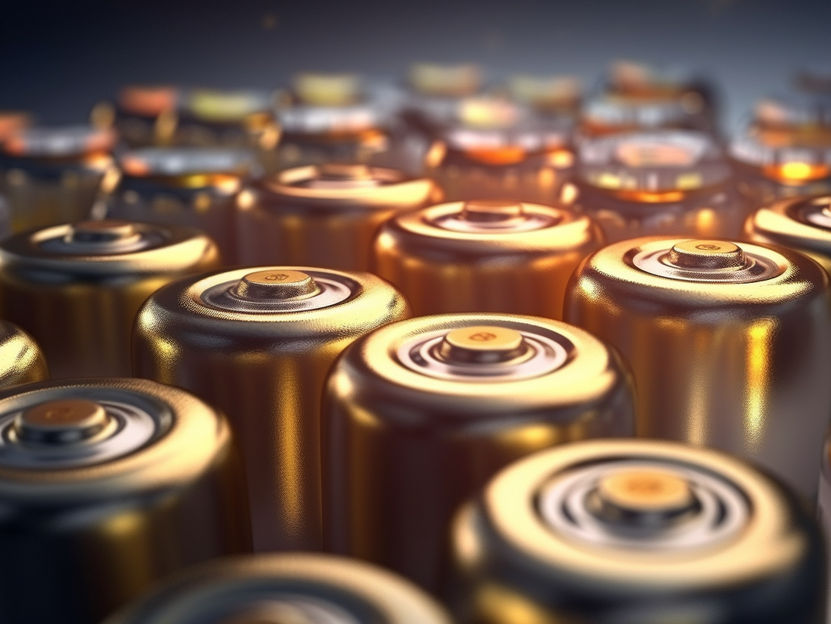
Symbolic image
Computer-generated image
Thanks to recent progress in analytical TEM techniques, such as Annular Bright Field (ABF) method, integrated differential phase contrast and Ptychography, it is now possible to identify Li ion sites inside a crystal. Electron energy loss spectrum could be utilized to detect Li element as well by recognizing its energy loss edge. However, these methods are challenging for beam-sensitive specimens like Solid Electrolyte Interphase (SEI) and Lithium dendrite which are essential to achieve long-term cycling of LIBs. Cryo-TEM has the ability to freeze the specimen to liquid nitrogen temperature, under which condition the high-energy electrons will not damage SEI easily. Moreover, by combining cryo-TEM and tomography method, three-dimensional morphology of Li dendrite could be reconstructed, providing more structural information hidden by two-dimension images.
“Due to the complex kinetics of electrode materials during battery cycling, it is of great importance to observe Li ion diffusion process in real-time. Last decade has witnessed many exciting results through in-situ TEM experiment, including phase transition, ion diffusion, defect evolution and valence change. As conventional dry-cell set-up is used to study the variation of electrode material itself, researchers can now study the reaction between electrode and liquid electrolyte with liquid-cell technique. Combined with emerging methods, we can deeply understand the reaction process and implement the mechanism to the modification of electrode materials.” Su says.
Despite excellent achievements have been made, limitations of these emerging methods still hinder the study of LIB materials. For example, the explanation of ABF and Ptychography images usually requires complex theoretical simulation. Also, continuous observation of electrode materials could damage the specimen during in-situ experiment. Therefore, more efforts should be devoted to improve these methods. Technique combination is one way to overcome the difficulties. For instance, performing low-dose method during in-situ TEM could minimize beam effect. Machine learning is also a path to simplify data analysis procedure and discover the hidden property-structure correlation.
Original publication
Other news from the department science








Most read news




More news from our other portals















Last viewed contents

Changes to Executive Board of Carl Zeiss AG - Dr. Ludwin Monz will be stepping down from his position as President and CEO of the Executive Board of Carl Zeiss Meditec AG at his own request
Breakthrough in protein research: Toolkit makes protein design faster and more accessible - What used to take weeks can now be completed in a day or less

DNA analysis reveals risk of post-meal insulin resistance - Targeted intervention may be possible
OGT Grants DNA Sequence Variation Licence to Biotype Diagnostics GmbH
New Method for Analysing Nanoporous Materials - Innovative method opens up new possibilities for materials science
A milestone on the pathway to Lab 4.0: A new standard for the smart lab - SPECTARIS presents the first industrial communication standard for laboratory and analytical devices

Fish and seafood - improved trace detection of life-threatening allergy sources - "AQUALLERG-ID": Researchers develop methods for detecting potential food allergens
PerkinElmer appoints President & Chief Operating Officer
ECHA calls for information to avoid unneccessary animal testing
Newly improved NIST reference material targets infant formula analysis

LAUDA appoints Dr. Ralf Hermann as the new General Manager Constant temperature equipment