Third-highest oxidation state secures rhodium a place on the podium
Discovery is a real surprise
oxidation states of transition metals describe how many electrons of an element are already engaged in bonding, and how many are still available for further reactions. Scientists from Berlin and Freiburg have now discovered the highest oxidation state of rhodium, indicating that rhodium can involve more of its valence electrons in chemical bonding than previously thought. This finding might be relevant for the understanding of catalytic reactions involving highly-oxidized rhodium. The result was recognized as a „very important paper“ in Angewandte Chemie.
Transition metals in high or unusual oxidation states might play an important role as catalysts or reaction intermediates in chemical reactions. Because transition metals are already well characterized in most cases, the discovery of a new oxidation state of rhodium came as a real surprise. The identification of rhodium(VII) was made possible by PhD student Mayara da Silva Santos and co-workers, who were able to isolate the species from any reactant in a low-temperature ion trap, and perform x-ray absorption spectroscopy for its characterization.
BESSY II was essential for the discovery
These kinds of experiments are highly demanding, and can, at present, only be carried out at BESSY II. „The combination of advanced sample preparation, low-temperature ion trapping, and x-ray spectroscopy is unique. Because these essential tools can even be applied to more complex systems, we anticipate further insight into exotic transition metal oxides“, says Vicente Zamudio-Bayer, head of the ion trap group at beamline UE52-PGM, who develops and operates the ion trap endstation at BESSY II. „What was important for us was that our surprising experimental findings could be substantiated by Sebastian Riedel‘s group at FU Berlin, who performed state-of-the-art calculations on the species in question“, explains Zamudio-Bayer. “Even rhodium in oxidation state +6 is very rare, so we had to be extremely careful about +7. New oxidation states are not discovered every day”, says Mayara da Silva Santos.
Catalytic relevance of a potential reaction intermediate
“This is the third-highest oxidation state of all elements. The fact that rhodium(VII) exists, but was unknown, could imply that it might have been overlooked when analyzing pathways of chemical reactions”, Zamudio-Bayer points out.
Possible stabilization for further use
The discovery of rhodium(VII) was made for gas-phase species, but a stabilization of the trioxidorhodium cation by weakly coordinating anions seems possible, based on comparison with other known compounds . This could open prospects for further characterization or applications. “Our rhodium(VII) species is highly reactive, but understanding these seemingly exotic species could lead to improved materials in the future,” Mayara da Silva Santos adds.
Original publication
Other news from the department science






Most read news



More news from our other portals















Last viewed contents

Schizophrenia manifests itself in the brain structure - The symptoms of schizophrenia vary greatly from person to person
The race is on for new lithium ion batteries - Battery consortium headed by BASF receives € 21 million sponsorship from German Ministry of Education and Research
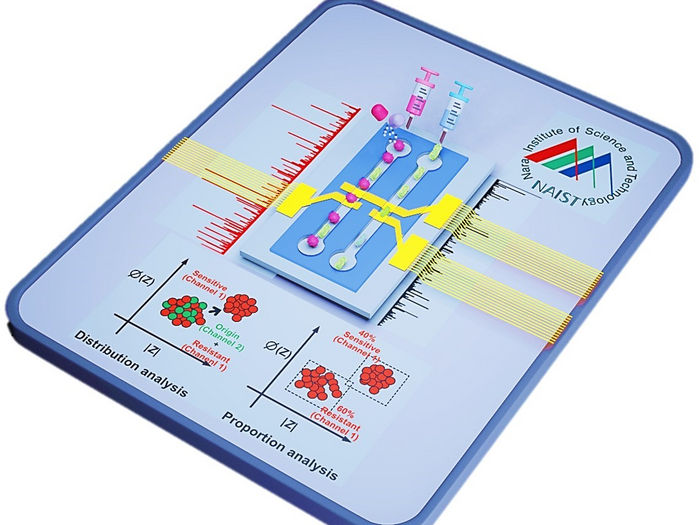
Antibiotic resistance testing no longer impeded by time - Researchers have developed a novel method for antibiotic resistance testing that might transform microbial screening in clinical and research labs
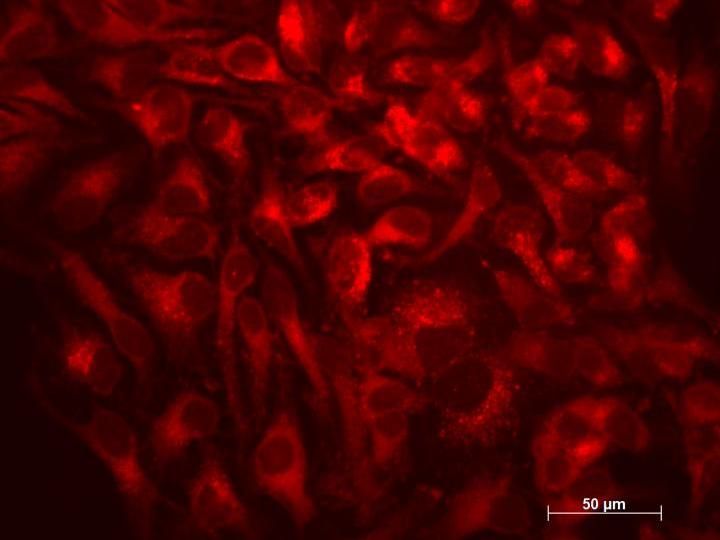
A new way to stimulate cellular recycling process

Thermo Fisher Scientific and QIAGEN N.V. Agree on Amended Terms to Acquisition Agreement - Offer price increased
New insights into the function of a risk factor for Alzheimer’s disease - Researchers decipher the structure-function relationship of the multifunctional protein clusterin for the first time

Rigaku opens Rigaku Technology Center Taiwan - Advancing regional growth through engineering and collaboration in Taiwan and beyond
Multiplexed Morse signals from cells
Lab901 and Biofortuna to collaborate on automated PCR Dx for HLA and Coeliac disease
Closing in on the elusive rotational-vibrational CH5+ spectra

New model predicts a chemical reaction’s point of no return - Chemists could use this quick computational method to design more efficient reactions that yield useful compounds, from fuels to pharmaceuticals