Paper discs that can pick up hydrogen peroxide
“We are in touch with a start-up company in Chennai”
Researchers at the Indian Institute of Science (IISc) have developed a paper-based sensor for detecting even tiny volumes of hydrogen peroxide. This chemical is used widely in household and healthcare products like hand sanitiser as a disinfectant, in rocket fuel as a propellant, and is also found in biological cells.
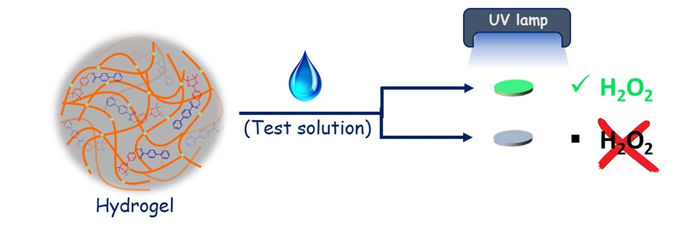
Schematic of process
Arnab Dutta
The technique they used involves preparing a gel from a solution containing a specially designed molecule, treated with a liquid that has hydrogen peroxide, and air-drying them on a thin paper disc about 0.45 cm in diameter. The paper disc emits green light when placed under a UV lamp, only in the presence of hydrogen peroxide. The intensity of the light was found to be directly proportional to the concentration of hydrogen peroxide.
“You can actually visualise this green emission (photoluminescence) with the naked eye. You don’t need any sophisticated instruments. All you need is a simple UV light source,” explains Arnab Dutta, PhD student in the Department of Organic Chemistry and first author of the study published in ACS Sensors.
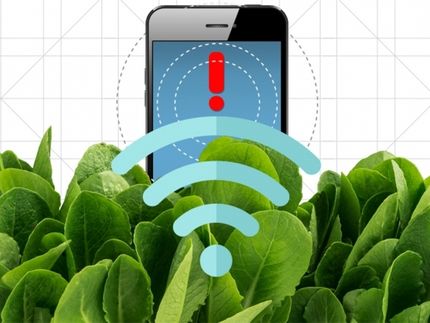
Because the paper disc is low-cost, biodegradable and easy to use, it could serve as a powerful tool in low-resource settings, even for testing biological fluids like blood. Detecting hydrogen peroxide efficiently is also crucial in other fields; peroxide-based explosives, for example, can be traced using hydrogen peroxide which is sometimes used as a starting material.
When the researchers used their technique to randomly test five different hand sanitiser brands, they found that only three of them contained the level of hydrogen peroxide mandated by the World Health Organisation – 0.125%. A fourth appeared to have much lower than 0.125% and one had almost zero hydrogen peroxide.
“Hydrogen peroxide can be detected on a larger scale using titration and other experiments, but those are cumbersome and require training. This method is easy because of its simplicity,” says Uday Maitra, Professor in the Department of Organic Chemistry and senior author of the study.
Maitra’s lab has been working on developing several ‘sensitiser’ molecules that turn on the photoluminescence of elements called lanthanides in the presence of specific chemicals or compounds. They have previously developed paper-based sensors for detecting specific antioxidants in green tea – and thereby testing its quality – as well as sensors for various enzymes.
The sensitiser molecule they designed in this study enables a metal called terbium to emit green light under a UV lamp. When the sensitiser is combined with a masking agent, the green light vanishes. When hydrogen peroxide is added to this combination, it unmasks the sensitiser molecule, making it glow green once again. “The way we designed the mask, that is where the thinking process comes in,” says Maitra. “The molecule we have designed is very specifically unmasked by hydrogen peroxide.”
Currently, the team is working on cutting down the reaction time; it takes a bit longer if the concentration of hydrogen peroxide is lower. Maitra adds that they are also working on developing a small portable device where the detection can be done in a more automated manner. “We are in touch with a start-up company in Chennai. We have a few prototypes made with UV LEDs and a camera, to generate the emission, take a photograph, and use an image processing app to quantify the amount of hydrogen peroxide.”
Original publication
Other news from the department science






Most read news




More news from our other portals














Something is happening in the life science industry ...
This is what true pioneering spirit looks like: Plenty of innovative start-ups are bringing fresh ideas, lifeblood and entrepreneurial spirit to change tomorrow's world for the better. Immerse yourself in the world of these young companies and take the opportunity to get in touch with the founders.
Last viewed contents
Imaging biomarker distinguishes prostate cancer tumor grade - Enhanced imaging tool has potential to detect, grade, stage and guide treatment options
BÜCHI acquires NIR-Online
Opto-electronic nose sniffs out toxic gases
ORNL scientists help explain graphene mystery
Altmann Analytik acquires lab supplier Dinkelberg analytics
New organ-on-chip pilot seeks to reduce animal testing in consumer health industry - Cooperation between Bayer, the start-ups esqLABS and Dynamic42, and Placenta Lab of Jena University Hospital
New method provides more precise information on types of leukaemia - Optical genome mapping could become a component of routine diagnostics
Oxford Nanopore Announces Licence Agreement with Harvard University for Graphene DNA sequencing

Waters and BD's Biosciences & Diagnostic Solutions Business to Combine - Creating a Life Science and Diagnostics Leader Focused on Regulated, High-Volume Testing

World's first toxicology testing strategy without animal testing adopted by OECD - Success for long-standing collaboration between BASF and Givaudan to develop and validate alternative methods
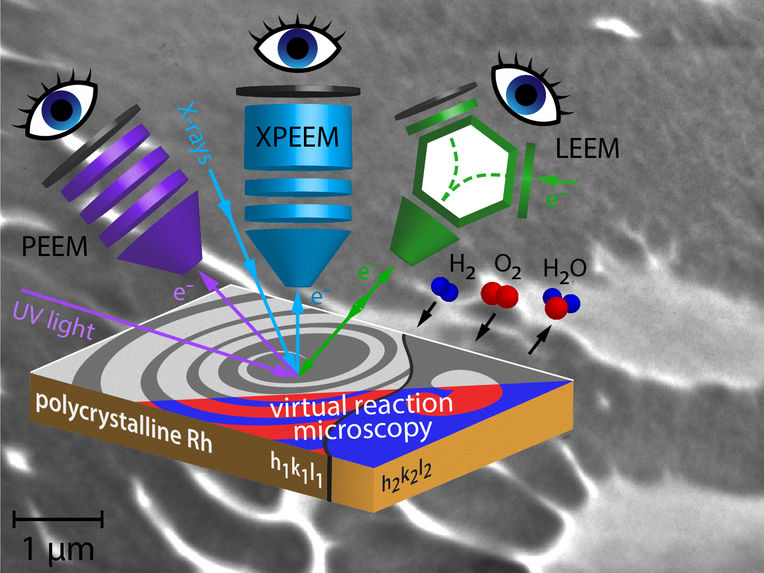
Three Eyes See More than Two - monitoring a catalytic reaction with three different microscopies under exactly the same conditions in real time - Information is obtained that none of the methods alone could reveal