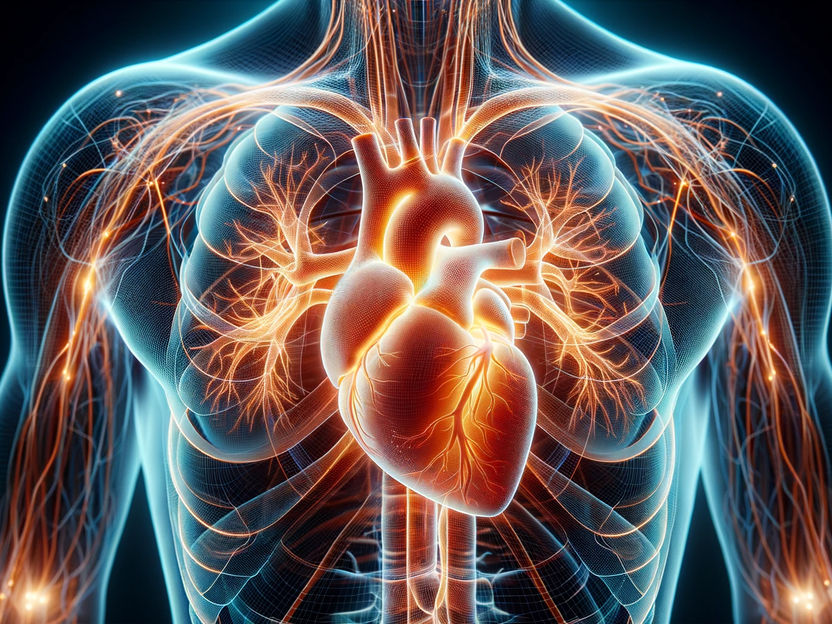
3D tissue structures on the chip act as organs in miniature
New organ-on-chip system enables precise monitoring of 3D tumour tissue outside the body
A research team around Dr. Andreas Weltin, Dr. Jochen Kieninger and Johannes Dornhof from the Department of Microsystems Engineering (IMTEK) at the University of Freiburg has developed a system that, among other things, makes it possible to study the development of tumour cells outside the human body in a three-dimensional environment. “We have realized an organ-on-chip system that can measure and control the culture conditions and metabolic rates of the cells at any time via microsensors. Until now, this has been only insufficiently possible in 3D cell cultures,” Weltin says. The system was developed in collaboration with the Molecular Gynecology group of the Department of Gynecology and Obstetrics at RWTH Aachen University Hospital. In the future, patient-derived cells in organ-on-chip systems could enable personalized cancer therapy. The scientists' work was published in the scientific journal “Lab on a Chip”.
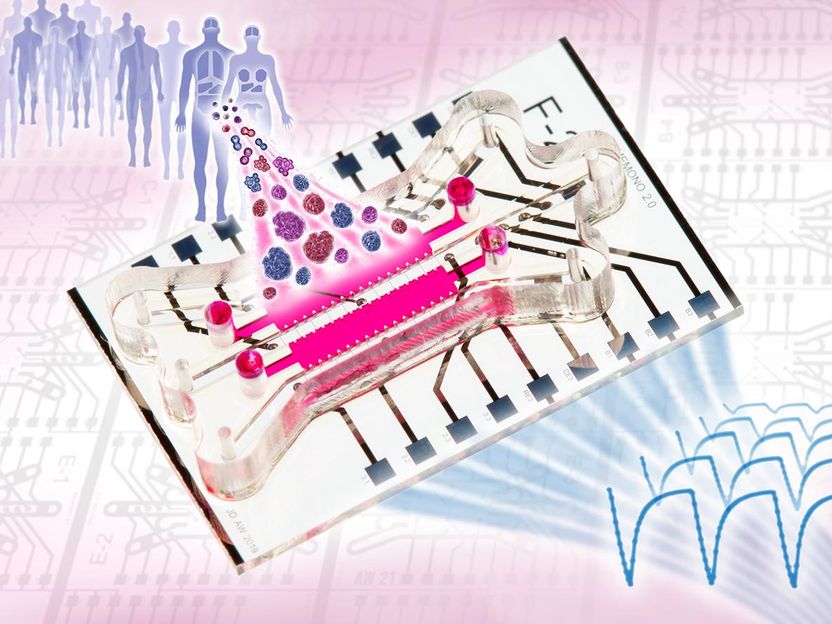
Organ-on-chip systems with patient–derived cells could enable personalized therapies.
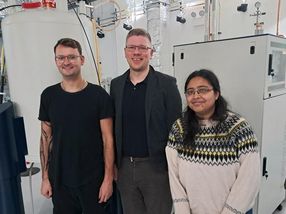
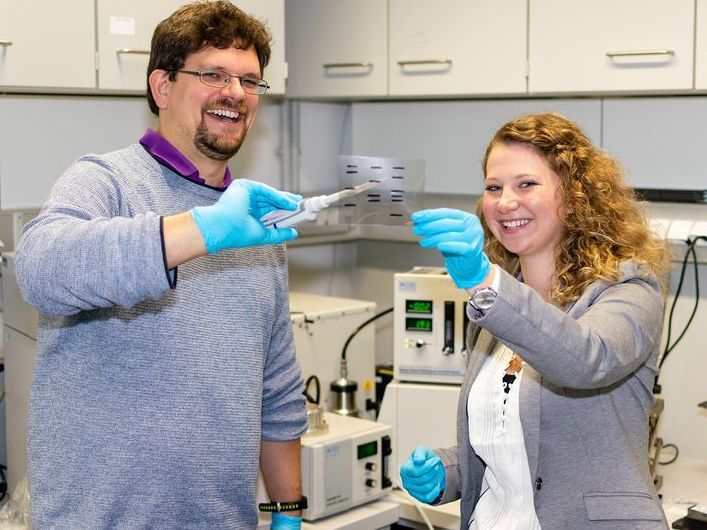
Johannes Dornhof and Andreas Weltin
Integrated sensors measure cellular metabolites
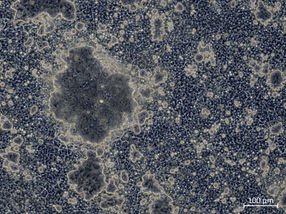
In organ-on-chip systems, three-dimensional tissue models are interconnected by an artificial circuit in such a way that they act like organs in miniature on a microchip. In this way, physiological processes – for example the growth of a tumour – can be reproduced and observed outside the human body. The research group created a chip design with integrated microsensors and microfluidics that can measure the cells’ metabolites directly in situ. In their system, the scientists grew breast cancer mini-tumours from individual stem cells and used electrochemical sensors to monitor cellular oxygen and glucose consumption and lactate production over a period of one week.
“Our platform enables the dynamic 3D culture of tumour organoids, whereas until now static 2D cultures have often been used, which can only recapitulate the complex microenvironment of a tumour to a limited extent,” says first author and PhD student Johannes Dornhof. In addition, the chip system can also be used to examine the effect of drugs on cell metabolism – for example, the cellular effect of chemotherapeutic agents could be recorded quantitatively and in real time in the context of cancer research.
Patient–derived cells could enable personalized therapy
The use of the patient’s own stem cells makes it possible to replicate an original tumour outside the body. This could offer new opportunities for personalized therapy, for example with regard to possible resistance to certain chemotherapeutic agents, which is crucial in aggressive triple-negative breast cancer. In the future, it should be possible to initially test drugs for a patient in organ-on-a-chip systems for effectiveness and side effects.
“Our results underline the potential of integrating microsensors into organ-on-chip systems in cancer research and drug development – especially with regard to personalized medicine,” says Weltin. And Dr. Jochen Kieninger explains: “This work nicely demonstrates the importance of interdisciplinary research. Bringing together different engineering disciplines with biology and medicine was essential for success.”
Original publication
Other news from the department science



Most read news


More news from our other portals














Last viewed contents
New test opens path for better 2-D catalysts
Nanobiosensor Developed for Detecting SARS-CoV-2 - New sensor technology breakthrough against the pandemic
DNA from extinct humans discovered in cave sediments - New method retrieve hominin DNA from cave sediments – even in the absence of skeletal remains
Researchers have succeeded for the first time in analyzing nanovesicles and proteins in parallel - This is important to determine the quality of a sample and to clearly attribute effects to the transport vesicles
Physicists create giant trilobite molecules - Results are important to understand the chemical binding mechanisms of them, which is distinct from all other chemical bonds
New resource for optical chips
Electron bubbles modelled from X-ray laser data - An international team of scientists uncovers a groundbreaking model for the effects of radiation in water systems
AIMe - A Standard for Artificial Intelligence in Biomedicine
Initiative taps scientists to create atlas of cells in human spinal cord
Immunotherapy against cancer: How therapeutic antibodies do their job - A new super-resolution microscopic method
Symcel secures €3.6 million Horizon 2020 Phase II grant - Multi-resistant bacterial sepsis infections to be validated utilising sensitive screening technology