 Verified
Microwave acid digestion systems:
ultraWAVE 3
ultraWAVE 3 – revolutionary microwave digestion system for reliable elemental analyses
Milestone srl
Greater digestion quality
Rugged construction
High performance and Increased throughput
Superior and Easy-to-use technology for an optimized sample preparation workflow
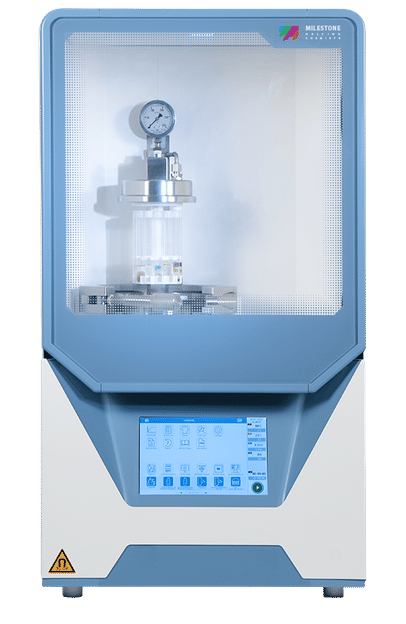
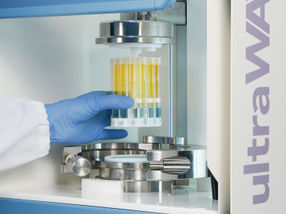
The ultraWAVE is based on the SRC (Single Reaction Chamber technology), invented by Milestone several years ago (Patents pending). SRC technology achieves extraordinary performance capabilities combining microwave heating with a high-pressure reactor which acts simultaneously as microwave cavity and vessel. The ultraWAVE chamber is sealed, pressurized, heated, cooled, vented, and opened via a dedicated touch-screen control terminal. Loading a rack of samples into the chamber is the only manual operation in an otherwise fully automated process of microwave-assisted sample preparation. The outer surfaces of the vessel remain at room temperature throughout the entire microwave heating cycle. As a result, the ultraWAVE is dramatically less labor intensive and easier to use compared to conventional microwave digestion systems.
Advantages:
- High performance. The highest temperatures & pressure capabilities and the fastest cooling time.
- Increased throughput. Double throughput of traditional microwave acid digestion instruments.
- No batching required. Simultaneous digestion of any sample type combination.
- Ease of use. Cleaning of digestion vials is not necessary. No vessel assembly/disassembly.
- Expertise and Support. 35-years experience at your lab with the Milestone Connect.
- Compliance. USP 232/233 Chapters, ICH Q3D Guidelines and FDA regulation 21 CFR part 11.
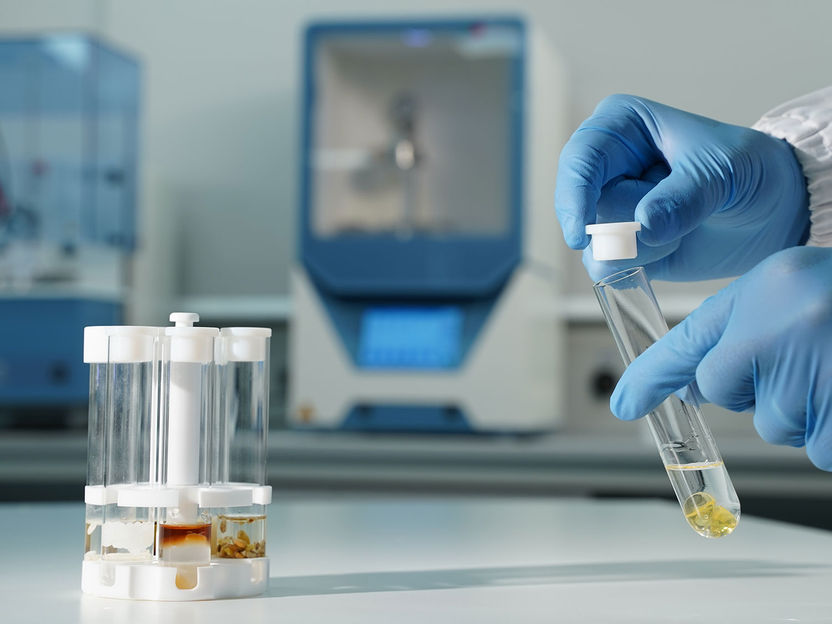
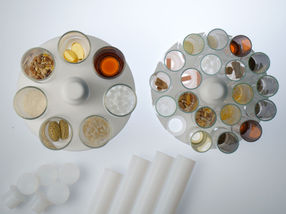
The ultraWAVE rack configurations include 4, 5, 8, 15, 19, 22 and 26 position and combinations thereof. Vials are available in TFM, quartz or disposable glass, and are fitted with loose TFM caps to ensure pressure equalization. Unlike conventional microwave digestion systems, no vessel assembly or disassembly is required. The use of disposable glass vials eliminates the cleaning step, further enhancing the lab’s workflow. The fast assembly of the vials, the automatic closing and opening cut the handling time, reducing the labour cost up to 50%.
COMPLETE DIGESTION AND DISSOLUTION
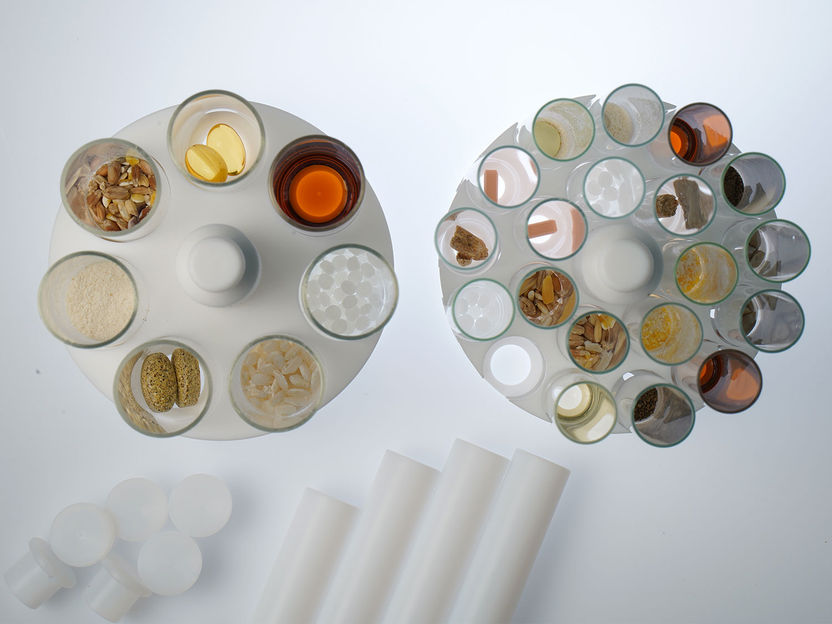
The more rigorous digestion conditions facilitate complete decomposition of the sample, ensuring that all target elements are in solution, even for the toughest and most chemically stable samples.
LOW BLANKS AND DILUTION
The use of low acid volumes or diluted acids in combination with high temperature reduces blank levels and dilution factors.
LOW RESIDUAL CARBON CONTENT
Complete digestion of the sample matrix also ensures the lowest residual carbon content thereby reducing polyatomic-based interferences during the analysis.
LARGER SAMPLE MASS
The combination of wide pressure range and accurate digestion control enables the safe digestion of larger sample masses - even for very reactive samples.
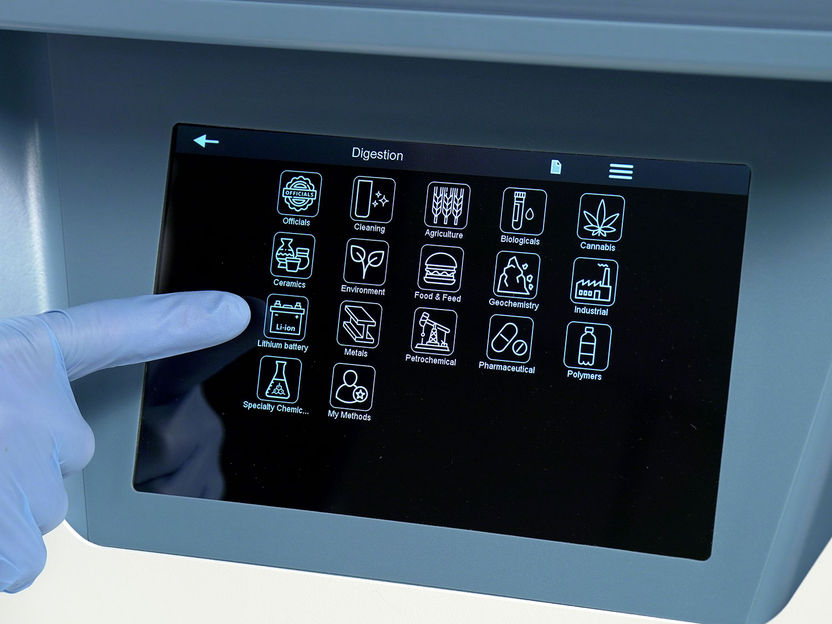
The ultraWAVE 3 user interface supports fast and easy operation. For a routine digestion, beginning the process only requires few seconds: open the method and press “start”. Single Reaction Chamber technology enables the use of a single method for the majority of sample types encountered in a typical lab. All the digestion parameters are automatically controlled by the system through a PID algorithm and are reported in the graph page as well as listed on the side bar present in all display pages.
The system incorporates a comprehensive list of methods, including official and standard methods, that guides the operator in the optimization of parameters based on specific matrices, so that the time for any method development and refinement that is called for can be minimized.
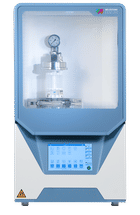
1
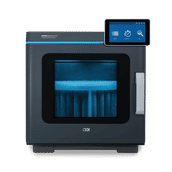
ultraWAVE 3 Single Reaction Chamber microwave digestion system
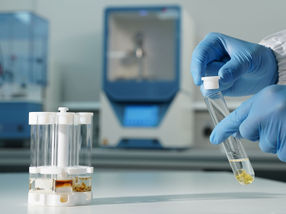
2
The vials and racks of ultraWAVE 3 are specifically designed to reduce assembly and disassembly time.
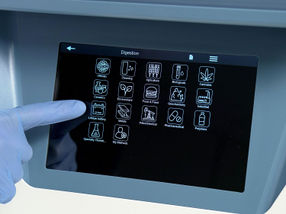
3
The user interface supports fast and easy operation. For a routine digestion, beginning the process only requires few seconds.
4
Accurate digestion control enables the safe digestion of larger sample masses - even for very reactive samples.
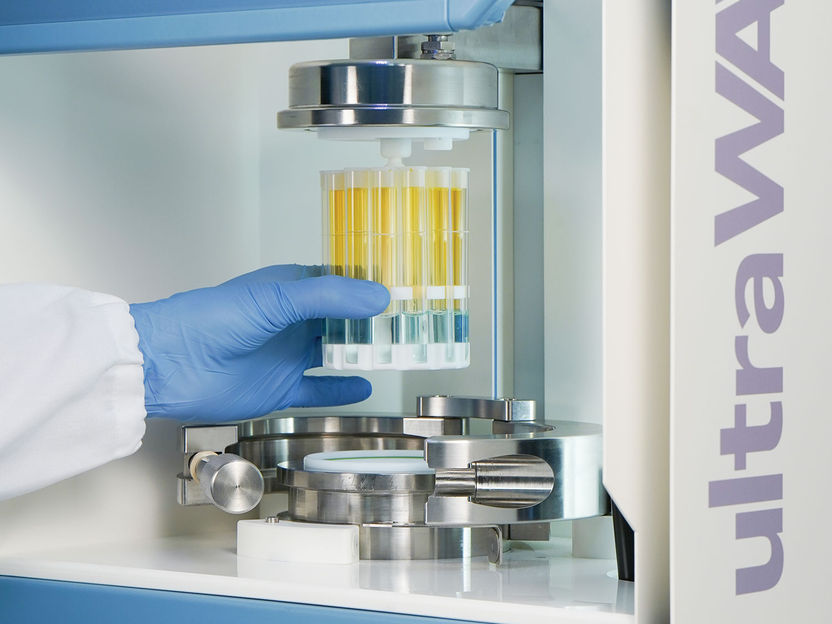
5
The most rigorous digestion conditions facilitate complete decomposition of every type of sample, ensuring that all target elements are in solution.
Request information about ultraWAVE 3 now
Microwave acid digestion systems: ultraWAVE 3
ultraWAVE 3 – revolutionary microwave digestion system for reliable elemental analyses
Product classification ultraWAVE 3
Product categories
Applications
Find more microwave acid digestion systems and related products

Find ultraWAVE 3 and related products in the theme worlds
Topic world Digestion
Sample digestion is a critical step in chemical analysis that often determines the success or failure of an investigation. It involves the targeted transformation and preparation of a sample to make the components of interest accessible for analysis. Various methods such as thermal, chemical or enzymatic digestion are used to dissolve matrix components, remove unwanted components and release target substances.
Topic world Digestion
Sample digestion is a critical step in chemical analysis that often determines the success or failure of an investigation. It involves the targeted transformation and preparation of a sample to make the components of interest accessible for analysis. Various methods such as thermal, chemical or enzymatic digestion are used to dissolve matrix components, remove unwanted components and release target substances.
Topic world Elemental analysis
Elemental analysis is a fundamental pillar of chemical research and enables the quantitative determination of the basic elements contained in a compound. It gives insight into the atomic composition and provides essential information about the structure and properties of molecules.
Topic world Elemental analysis
Elemental analysis is a fundamental pillar of chemical research and enables the quantitative determination of the basic elements contained in a compound. It gives insight into the atomic composition and provides essential information about the structure and properties of molecules.
Topic world Extraction
Extraction is a fundamental process in the chemical laboratory that enables specific components to be isolated and concentrated from a mixture. Whether it's extracting active ingredients from natural products, removing impurities from synthesis products, or preparing analytical samples, extraction is a key step in achieving precise and efficient results in chemical research and analysis.
Topic world Extraction
Extraction is a fundamental process in the chemical laboratory that enables specific components to be isolated and concentrated from a mixture. Whether it's extracting active ingredients from natural products, removing impurities from synthesis products, or preparing analytical samples, extraction is a key step in achieving precise and efficient results in chemical research and analysis.