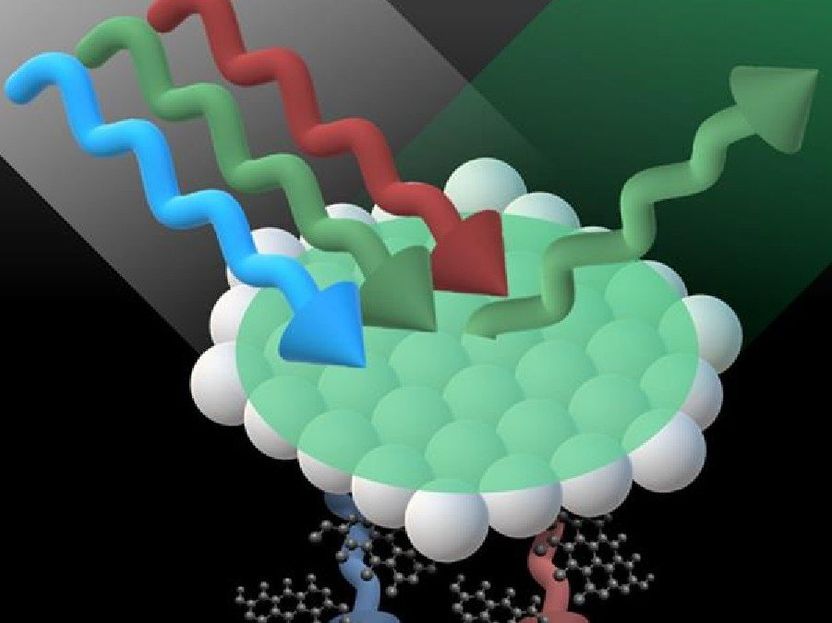
The Royal Swedish Academy of Sciences (RSAS) has awarded the Gregori Aminoff Prize in Crystallography 2013
Nature of crystals measured by X-rays and interpreted in Italy and Australia
The Royal Swedish Academy of Sciences (RSAS) has awarded the Gregori Aminoff Prize in crystallography 2013 to Carlo Gatti, Institute of Molecular Sciences and Technology, Italian National Research Council, Milan, Italy and Mark Spackman, University of Western Australia, Crawley, Australia "for developing experimental and theoretical methods to study electron density in crystals, and using them to determine molecular and crystalline properties".
Crystallography is the science of the arrangement of atoms in solid materials. To reveal the atomic structure of a crystal, an 'X-ray diffraction method' may be used. In this method an X-ray beam strikes a crystal, showing a diffraction pattern that, in turn, can
be transformed into a 3D model of the crystal. This technique is now widely used in geology, physics, chemistry, biology, medicine and materials engineering. Purposes include determining mineral properties, proteins and DNA structures, and developing strong new materials.
Both Carlo Gatti and Mark Spackman have independently developed concepts for interpreting electron density distributions related to quantum chemistry theory, using multipole analysis of high-quality X-ray diffraction data. This approach has, in particular,
significantly demonstrated and quantified the role of hydrogen bonding in molecular systems. 'Charge density topology' is important for classification of the type and strength of chemical bonding in solid compounds and molecules.

Other news from the department science










Most read news








More news from our other portals

























Last viewed contents
Pushing the Boundaries: New dye could open the door to in vivo applications of fluorescence anisotropy
A new tool for estimating people’s total exposure to potentially harmful chemicals is developed by Mount Sinai researchers
Thermo Fisher Scientific Strengthens Presence in India with Acquisition of Chemito Technologies
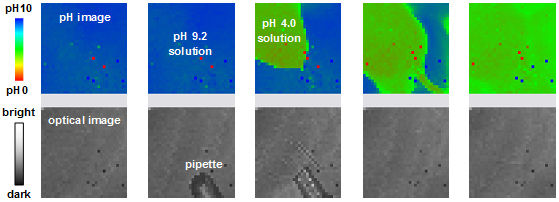
Bioelectronics: Invention of the pH imaging microscope for applications including treatment of Alzheimer’s disease.
New technique shows in detail where drug molecules hit their targets in the body - The new method could speed the development of many new drugs
Thermo Fisher Scientific and George Mason University Partner in Protein Biomarker Research Project - Collaboration Aims to Accelerate Verification and Validation of Protein Biomarkers for Earlier Disease Diagnosis and Therapeutic Efficacy
Flemish researchers provide the first experimental evidence of dynamic allostery in protein regulation
Revolutionary images of the birth of crystals - A team from the UNIGE has succeeded in visualizing crystal nucleation - the stage that precedes crystallization - that was invisible until now