Argonne’s lithium-ion battery technology to be commercialized by BASF
BASF proposes construction of lithium-ion battery material production plant in Elyria, Ohio
The U.S. Department of Energy's (DOE) Argonne National Laboratory and BASF have signed a world-wide licensing agreement to mass produce and market Argonne's patented composite cathode materials to manufacturers of advanced lithium-ion batteries.
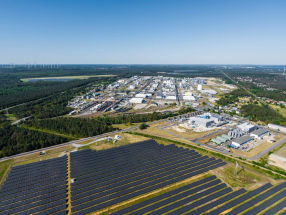
BASF will conduct further lithium-ion battery material application development in its current Beachwood, Ohio facility. Contingent upon winning a DOE grant under Recovery Act - Electric Drive Vehicle Battery and Component Manufacturing Initiative (DE-FOA-0000026), BASF plans to build one of North America’s largest cathode material production facilities in Elyria, Ohio.
The patented cathode materials licensed to BASF are part of a large and diverse suite of lithium-ion battery inventions and patents developed at Argonne with funding from DOE's Vehicle Technologies Program. The further development and commercialization of the cathode materials will result in advanced batteries that are higher-performing, longer-lasting and safer when compared to the existing technology that has dominated the market for nearly two decades.
“BASF is excited to begin this partnership with Argonne National Laboratory as we look to advance the lithium-ion battery market in North America,” said Joseph Breunig, BASF Corporation President of Market and Business Development. “The aim of our application development team in Beachwood, Ohio, along with our funding proposal to DOE for a world class facility in Elyria, Ohio is to make lithium-ion battery use realistic, affordable and widely available. Partnerships like this are exactly the type of public-private investment commitment that will create a more sustainable environment, help move the economy forward and create new jobs.”
"This licensing agreement has the potential to put the United States several steps closer to reaching President Obama's goal of having one million plug-in hybrid electric vehicles on the road by 2015," said Argonne Director Eric Isaacs. "The transfer of Argonne-developed battery technology to BASF provides a stellar example of why DOE invests taxpayer dollars into scientific research and development. When federally funded R&D is commercialized, it enhances our economic competitiveness, energy security and quality of life through innovations in science and technology."
When completed, the proposed BASF facility in Elyria, Ohio, is expected to be the largest cathode material production facility in North America. The cathode material licensed from DOE has been shown to be a material of choice among the largest North American and Asian cell manufacturers that are actively engaged in providing lithium-ion battery solutions to the automotive and other commercial marketplaces. The impact of such a facility is anticipated to be significant as the facility construction and staffing will have a positive economic impact for Ohio and will attract further businesses to North America.
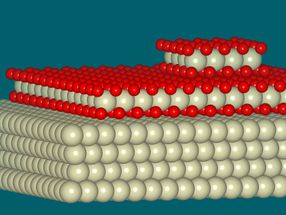
Argonne's composite cathode material employs a unique combination of lithium- and manganese-rich mixed-metal oxides in a revolutionary materials-design approach to extend the operating time between charges, increase the calendar life and improve the inherent safety of lithium-ion cells. Moreover, the enhanced stability of the composite material permits battery systems to charge at higher voltages, which leads to a substantially higher energy storage capacity than currently available materials through both the higher voltage and higher capacity per unit weight of active material. BASF intends to commercialize these cathode materials for transportation and other applications.
Other news from the department science