Visit our exhibition network
April 9–12, 2024 Munich
November 18–20, 2024 Shanghai
April 15–17, 2024 Mumbai
April 2–4, 2025 Ho Chi Minh City
July 8–10, 2025 Johannesburg
Our next fair
analytica has been the world’s leading trade fair for laboratory technology, analysis and biotechnology for five decades.
April 9–12, 2024
Munich
Selected departments
Selected industries
Most read white papers
From now on, don't miss a thing: Our newsletter for analytics and lab technology brings you up to date every Tuesday. The latest industry news, product highlights and innovations - compact and easy to understand in your inbox. Researched by us so you don't have to.
Note
The function "Store search" is only available to registered users.
Important information
Currently, you are not logged in to my.analytica-world.com. Therefore, you can remember a maximum of 5 contents.
FILTER
Refine your search with the following facets to narrow down your results.
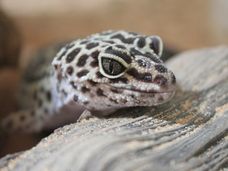
02-Nov-2018 - Geckos and many other animals have heads that are too small to triangulate the location of noises the way we do, with widely spaced ears. Instead, they have a tiny tunnel through their heads that measures the way incoming sound waves bounce around to figure out which direction they came ...
24-Jul-2018 - The hormone cortisol rises and falls naturally throughout the day and can spike in response to stress, but current methods for measuring cortisol levels require waiting several days for results from a lab. By the time a person learns the results of a cortisol test - which may inform treatment for ...
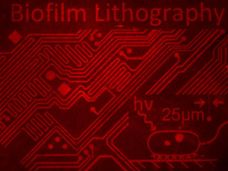
21-Mar-2018 - Working with light and genetically engineered bacteria, researchers from Stanford University are able to shape the growth of bacterial communities. From polka dots to stripes to circuits, they can render intricate designs overnight. The technique can achieve biofilms grown at a resolution of 25 ...
08-Feb-2018 - Although critical for varied applications, such as cutting and welding, surgery and transmitting bits through optical fiber, lasers have some limitations - namely, they only produce light in limited wavelength ranges. Now, researchers from the Ginzton Lab at Stanford University have modified ...
29-Jun-2017 - While doing research at the Woods Hole Marine Biological Laboratory in Massachusetts, Sindy Tang learned of a remarkable organism: Stentor coeruleus. It's a single-celled, free-living freshwater organism, shaped like a trumpet and big enough to see with the naked eye. And, to Tang's amazement, if ...
27-Feb-2017 - Cells within our bodies divide and change over time, with thousands of chemical reactions occurring within each cell daily. This makes it difficult for scientists to understand what's happening inside. Now, tiny nanostraws developed by Stanford researchers offer a method of sampling cell contents ...
18-Jan-2017 - In a lab 18 feet below the Engineering Quad of Stanford University, researchers in the Dionne lab camped out with one of the most advanced microscopes in the world to capture an unimaginably small reaction. The lab members conducted arduous experiments - sometimes requiring a continuous 30 hours ...
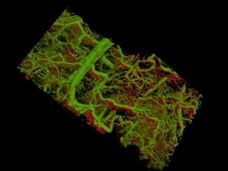
22-Mar-2016 - Scientists have many tools at their disposal for looking at preserved tissue under a microscope in incredible detail, or peering into the living body at lower resolution. What they haven't had is a way to do both: create a three-dimensional real-time image of individual cells or even molecules in ...
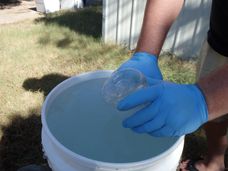
17-Feb-2016 - "The answer to that question is usually 'no,' but there are exceptions," said Stanford Professor Rob Jackson, a professor of Earth system science at Stanford University, and a senior fellow at the Stanford Woods Institute for the Environment and at the Precourt Institute for Energy. An expert on ...
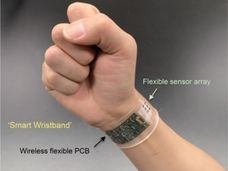
Wearable device detects, analyzes real-time changes in chemical composition of sweat
29-Jan-2016 - A team of researchers has combined two separate technologies to create a health-monitoring device that is noninvasive, doesn't interfere with strenuous outdoor activities and can continuously track a user's health at the molecular level. The two-part system of flexible sensors and a flexible ...
© 1997-2024 LUMITOS AG, All rights reserved