9 Current news about the topic polystyrene

rss

Icy exposure creates armored polymer high tech foams

30-07-2009

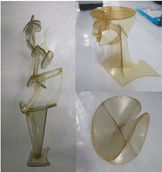
Chemists and engineers at the University of Warwick have found that exposing particular mixtures of polymer particles and other materials to sudden freeze-drying can create a high-tech armored foam that could be used for a number of purposes, including a new range of low power room ...

more

ECHA recommends strict control for seven substances of very high concern

04-06-2009

The European Chemicals Agency recommends that seven chemical substances of very high concern should not be used without specific authorisation. Three of the recommended substances are classified as toxic to reproduction, one as carcinogenic and three fulfil the criteria for being persistent, ...

more

Using light to move and trap DNA molecules

06-01-2009

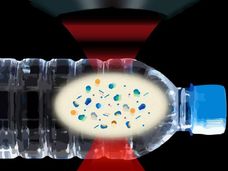
A major goal of nanotechnology research is to create a "lab on a chip," in which a tiny biological sample would be carried through microscopic channels for processing. This could make possible portable, fast-acting detectors for disease organisms or food-borne pathogens, rapid DNA sequencing ...

more

image description
Spectral imager for detecting bruised fruit

06-10-2008

The apricots on display in the supermarket look fresh when they have just arrived, but some will have developed bruises by the next day. Hyperspectral imaging allows these fruit to be identified in advance, but is expensive. Now there is a cheaper version of the technique. Peaches, apricots ...

more

MIT gel changes color on demand

Material could lead to fast, inexpensive sensors

23-10-2007

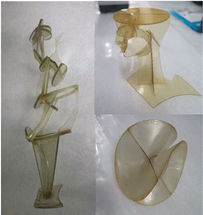
MIT researchers have created a new structured gel that can rapidly change color in response to a variety of stimuli, including temperature, pressure, salt concentration and humidity. Among other applications, the structured gel could be used as a fast and inexpensive chemical sensor, says ...

more

image description
New DNA-Based Technique For Assembly of Nano- and Micro-sized Particles

14-09-2007

Scientists at the U.S. Department of Energy's Brookhaven National Laboratory have developed a new method for controlling the self-assembly of nanometer and micrometer-sized particles. The method, based on designed DNA shells that coat a particle's surface, can be used to manipulate the ...

more

Side-to-side shaking of nanoresonators throws off impurities

08-08-2007

Tiny vibrating silicon resonators are of intense interest in nanotechnology circles for their potential ability to detect bacteria, viruses, DNA and other biological molecules. Cornell researchers have demonstrated a new way to make these resonators vibrate "in the plane" - that is, side to ...

more

Rings Made of Little Rods

Water droplets as templates: gold nanorods self-assemble into rings

14-03-2007

Rod-shaped nanocrystals normally arrange themselves parallel to each other. Researchers at Rice University in Houston, Texas now report in the journal Angewandte Chemie completely unexpected behavior of nano-objects: the spontaneous self-assembly of polymer-coated metallic nanorods into ...

more

Cornell researchers make synthetic DNA 'barcodes' to tag pathogens, providing an inexpensive, off-the-shelf monitoring system

16-06-2005

A supermarket checkout computer can identify thousands of different items by scanning the tiny barcode printed on the package. New technology developed at Cornell University could make it just as easy to identify genes, pathogens, illegal drugs and other chemicals of interest by tagging them ...

more

Page 1 From 1
Subscribe to e-mail updates relating to your search

You will receive via e-mail the latest search results matching your search criteria. This service is free of charge and can be cancelled at any time.

Your browser is not current. Microsoft Internet Explorer 6.0 does not support some functions on Chemie.DE