8 Current news of ucsd
rssCarbon nanofibers assembled into photonic crystals change color as activated charcoal filters become saturated with dangerous vapors
05-03-2011
A new kind of sensor could warn emergency workers when carbon filters in the respirators they wear to avoid inhaling toxic fumes have become dangerously saturated. In a recent issue of the journal Advanced Materials, a team of researchers from the University of California, San Diego and Tyco ...
05-20-2010
A tiny silicon chip that works a bit like a nose may one day detect dangerous airborne chemicals and alert emergency responders through the cell phone network. If embedded in many cell phones, its developers say, the new type of sensor could map the location and extent of hazards like gas ...
12-15-2009
Scientists have resolved a question about how a popular class of drugs used to treat schizophrenia works using biosensors that reveal previously hidden components of chemical communication in the brain. Although delusions and hallucinations characterize the illness, people with schizophrenia ...
01-12-2009
A study looking at the entire human genome has identified new genes that appear to be involved in making some children more susceptible to Kawasaki disease, according to a new international study published in PLoS Genetics . The research team, from The University of Western Australia, the ...
For the discovery and development of the green fluorescent protein, GFP
10-08-2008
The Royal Swedish Academy of Sciences has decided to award the Nobel Prize in Chemistry for 2008 jointly to Osamu Shimomura, Marine Biological Laboratory (MBL), Woods Hole, MA, USA and Boston University Medical School, MA, USA, Martin Chalfie, Columbia University, New York, NY, USA and Roger ...
06-12-2008
Using one of the world's most powerful sources of man-made radiation, physicists from UC San Diego, Columbia University and Lawrence Berkeley National Laboratory have uncovered new secrets about the properties of graphene - a form of pure carbon that may one day replace the silicon in ...
05-27-2008
US scientists have designed a new spray-on explosive detector sensitive enough to detect just a billionth of a gram of explosive. After treatment the explosive glows blue under UV light, making it perfect for use in the field. William Trogler and his team at the University of California, San ...
03-20-2008
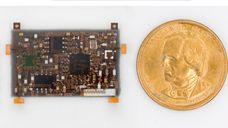
A team of chemists and physicists at the University of California, San Diego has developed a tiny, inexpensive sensor chip capable of detecting trace amounts of hydrogen peroxide, a chemical used in the most common form of homemade explosives. The invention and operation of this penny-sized ...