17 Current news of Harvard University

rss

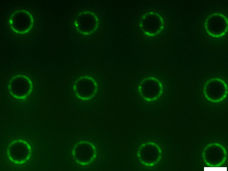
Harvard’s Wyss Institute creates living human gut-on-a-chip

03-29-2012

By simulating the structure, microenvironment, and mechanical behavior of human intestine, a new microdevice could provide insights into disorders and help evaluate potential treatmentsResearchers at the Wyss Institute for Biologically Inspired Engineering at Harvard University have created a ...

more

Agilent Technologies Awards Two Integrated-Biology Research Grants

10-25-2011

Agilent Technologies Inc. announced the winners of the 2011 eMerging Insights grant program: Dr. Michael J. MacCoss of the University of Washington and Dr. Peter J. Park of Harvard University. Each will be awarded $75,000 toward their ongoing research on open source data-integration tools.The ...

more

Intelligent catalysis allows controlled synthesis of fluorinated compounds

Professor Tobias Ritter of Harvard University receives BASF Catalysis Award 2011

07-26-2011

For his outstanding research contributions to catalytic processes in organic synthesis, Professor Dr. Tobias Ritter of Harvard University in Cambridge (USA) is receiving the BASF Catalysis Award 2011. The prize, worth €10,000, was presented by Dr. Friedrich Seitz, Head of BASF’s Technology ...

more

Oxford Nanopore Announces Licence Agreement with Harvard University for Graphene DNA sequencing

03-15-2011

Oxford Nanopore Technologies Ltd announced an exclusive agreement with Harvard University's Office of Technology Development for the development of graphene for DNA sequencing. Graphene is a robust, single atom thick ‘honeycomb’ lattice of carbon with high electrical conductivity. These ...

more

MIT: New cell measurement system

New system could shed light on how cells control their growth

04-13-2010

Using a sensor that weighs cells with unprecedented precision, MIT and Harvard researchers have measured the rate at which single cells accumulate mass — a feat that could shed light on how cells control their growth and why those controls fail in cancer cells. The research team, led by ...

more

Method of the future uses single-cell imaging to identify gene interactions

02-09-2010

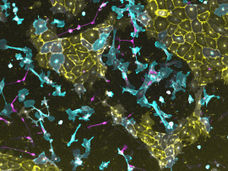
Cellular imaging offers a wealth of data about how cells respond to stimuli, but harnessing this technique to study biological systems is a daunting challenge. In a study published in Genome Research, researchers have developed a novel method of interpreting data from single-cell images to ...

more

Quantum computer calculates exact energy of molecular hydrogen

Groundbreaking approach could impact fields from cryptography to materials science

01-13-2010

In an important first for a promising new technology, scientists have used a quantum computer to calculate the precise energy of molecular hydrogen. This groundbreaking approach to molecular simulations could have profound implications not just for quantum chemistry, but also for a range of ...

more

Scientists demonstrate multibeam, multi-functional lasers

Adaptable technology opens the door to a wide range of applications in chemical detection, climate monitoring and communications

12-02-2009

An international team of applied scientists from Harvard, Hamamatsu Photonics, and ETH Zürich have demonstrated compact, multibeam, and multi-wavelength lasers emitting in the invisible part of the light spectrum (infrared). By contrast, typical lasers emit a single light beam of a ...

more

Quantum gas microscope offers glimpse of quirky ultracold atoms

Research creates a readout system for quantum simulation and computation

11-10-2009

Physicists at Harvard University have created a quantum gas microscope that can be used to observe single atoms at temperatures so low the particles follow the rules of quantum mechanics, behaving in bizarre ways. The work, published in the journal Nature, represents the first time ...

more

image description
Harvard scientists bend nanowires into 2-D and 3-D structures

New 'stereocenters' introduce triangular joints into otherwise linear nanomaterials

10-27-2009

Taking nanomaterials to a new level of structural complexity, scientists have determined how to introduce kinks into arrow-straight nanowires, transforming them into zigzagging two- and three-dimensional structures with correspondingly advanced functions. The work is described in the journal ...

more

Page 1 From 2
Subscribe to e-mail updates relating to your search

You will receive via e-mail the latest search results matching your search criteria. This service is free of charge and can be cancelled at any time.

Your browser is not current. Microsoft Internet Explorer 6.0 does not support some functions on Chemie.DE