Keeping track to selenium metabolism
Spanish and Danish researchers have developed a method for the in vivo study of the unknown metabolism of selenium, an essential element for living beings. The technique can help clarify whether or not it possesses the anti-tumour properties that have been attributed to it and yet have not been verified through clinical trials.
"It is vox populi that doctors around the world recommend selenium supplements to complement traditional therapy against cancer and the AIDS virus but the truth is that the basics of these properties are not clear," explains to SINC Justo Giner, a chemist from the University of Oviedo (Spain).
"Even the general metabolism of selenium has not been completely cleared up," adds Giner who, along with other researchers at the same university and the University of Pharmaceutical Sciences of Copenhagen (Denmark), has developed a new methodology for discovering how this element moves around living organisms.
The in vivo study was carried out on laboratory rats, which were administered a stable metabolic tracer of enriched selenium (77Se). According to the researcher, "it opens the door for transferring this method to clinical trials on humans given that innocuous, non-radioactive isotopes are used."
In line with expected findings, the results reveal that selenium concentrations in biological tissue, blood and urine samples can indeed be analysed. Therefore, mass spectrometry techniques are employed along with a second isotopic tracer (74Se), which helps to quantify "with unequivocal precision" infinitesimal amounts of selenium in its different chemical forms that are distributed by the body.
Selenium is an antioxidant and plays an important role in the body's immune response. Understanding the path that it takes from the moment it is administered to when it is excreted could help to clarify its metabolism and its possible protecting effect against cancer and HIV.
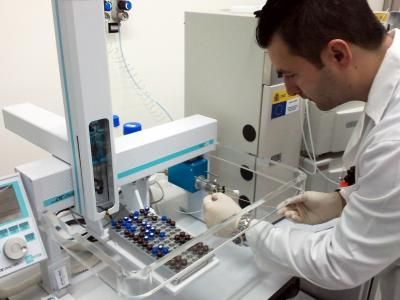
The technique allows for infinitesimal amounts of selenium to be quantified in their different chemical forms.
J. Giner et al.
The ideal dose of selenium
The main sources of selenium come from foods such as yeasts, animal products (meat, seafood, dairy products) and vegetables like broccoli, wheat-germ, nuts (especially Brazil nuts), oats, garlic and barley. The current recommended daily intake of selenium is approximately 55 micrograms for women and 70 micrograms for men.
Selenium deficiency is associated with different pathologies like endemic cardiomyopathy, cystic fibrosis, multiple sclerosis, rheumatoid arthritis, haemolysis and muscular dystrophy. Furthermore, thyroid metabolism is affected by selenium levels since the glands deiodinasa enzymes are in fact selenoproteins.
In contrast though, when intake is higher than nutritional requirements, selenium is considered a 'nutraceutical'. Mainly thanks to its antioxidant properties this means that it is beneficial for the health as long as it does not surpass the threshold in which it starts to become toxic.
Original publication
Other news from the department science














Get the analytics and lab tech industry in your inbox
From now on, don't miss a thing: Our newsletter for analytics and lab technology brings you up to date every Tuesday. The latest industry news, product highlights and innovations - compact and easy to understand in your inbox. Researched by us so you don't have to.