Roche and IBM Collaborate to Develop Nanopore-Based DNA Sequencing Technology
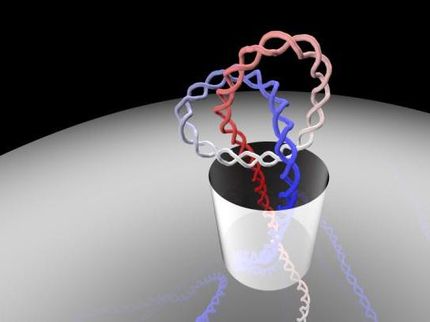
Roche and IBM announced an agreement to develop a nanopore-based sequencer that will directly read and decode human DNA quickly and efficiently. Focused on advancing IBM’s recently published “DNA Transistor” technology, the collaboration will take advantage of IBM’s leadership in microelectronics, information technology and computational biology and Roche’s expertise in medical diagnostics and genome sequencing.
The novel technology, developed by IBM Research, offers true single molecule sequencing by decoding molecules of DNA as they are threaded through a nanometer-sized pore in a silicon chip. The approach holds the promise of significant advantages in cost, throughput, scalability, and speed compared to sequencing technologies currently available or in development.
“By merging computational biology, biotechnology, and nanotechnology skills, we are moving closer to producing a system that can quickly and accurately translate DNA into medically-relevant genetic information,” said Ajay Royyuru, Senior Manager of the Computational Biology Department at IBM Research. “The challenge of all nanopore-based sequencing technologies is to slow and control the motion of the DNA through the nanopore. We are developing the technology to achieve this so that the reader can accurately decode the DNA sequence.”
Ultimately, the technology has the potential to improve throughput and reduce costs to achieve the vision of whole human genome sequencing at a cost of $100 to $1,000. Having access to an individual’s personal genetic code could advance the quality of medical care by identifying persons who will gain the greatest benefit from a particular medicine and those who are at most risk of adverse reaction.
“Sequencing is an increasingly critical tool for personalized healthcare. It can provide the individual genetic information necessary for the effective diagnosis and targeted treatment of diseases,” explained Manfred Baier, Head of Roche Applied Science. "We are confident that this powerful technology - plus the combined strengths of IBM and Roche – will make low-cost whole genome sequencing and its benefits available to the marketplace faster than previously thought possible.”
As part of the agreement, Roche will fund continued development of the technology at IBM and provide additional resources and expertise through collaboration with Roche’s sequencing subsidiary, 454 Life Sciences. Roche will develop and market all products based on the technology.
Other news from the department business & finance














Get the analytics and lab tech industry in your inbox
From now on, don't miss a thing: Our newsletter for analytics and lab technology brings you up to date every Tuesday. The latest industry news, product highlights and innovations - compact and easy to understand in your inbox. Researched by us so you don't have to.
Most read news







More news from our other portals





























See the theme worlds for related content
Topic world Diagnostics
Diagnostics is at the heart of modern medicine and forms a crucial interface between research and patient care in the biotech and pharmaceutical industries. It not only enables early detection and monitoring of disease, but also plays a central role in individualized medicine by enabling targeted therapies based on an individual's genetic and molecular signature.

Topic world Diagnostics
Diagnostics is at the heart of modern medicine and forms a crucial interface between research and patient care in the biotech and pharmaceutical industries. It not only enables early detection and monitoring of disease, but also plays a central role in individualized medicine by enabling targeted therapies based on an individual's genetic and molecular signature.
