How safe is safe?
BfR stakeholder conference explores the opportunities and limits of state risk prevention
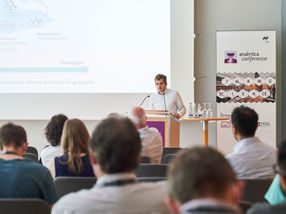
When are we sufficiently protected from danger? Does the state ensure that risks are kept to a minimum? The question about how far state risk prevention can go and the degree of safety that state measures can, may and must offer is raised not only in the field of consumer health protection. At the BfR Stakeholder Conference "Safer than Safe? Legislation, Perception and Reality in State Risk Prevention" staged by the Federal Institute for Risk Assessment (BfR) in Berlin, the Presidents, Vice Presidents and members of the boards of the Federal Cartel Office, Federal Office for Information Security, Federal Office for radiation Protection, Federal Institute for Materials Research and Testing and the Federal Institute of Physics and metrology outlined how they deal with people’s claims to protection from harm in various areas like information technology, internal security, radiation or food. Around 80 representatives of various federal institutes and the sciences discussed the contribution that the natural scientific assessment of risks can make to risk prevention and avoidance. The experts also gave some thought to the extent to which transparent risk communication can close the gap between an objectively measured safety situation and subjectively perceived safety. "We know that a great deal has still to be done particularly in the field of risk perception", says BfR President Professor Dr. Dr. Andreas Hensel. "The fact that a problem or data can be interpreted in different ways by science is a major contributory factor to the differences between the perceived and objective safety level. This is where we need to create trust by disclosing procedures, criteria and possible uncertainties in scientific risk assessment."
But why do people want to feel safe in various areas of life? In one presentation this attitude was attributed to a fundamental change in paradigms in the way people see the world. In modern, enlightened and secular societies safety was understood as what can be done by people with the help of scientific, technical or administrative measures. In the religiously shaped pre-modern world safety was seen as a gift and as something that could not be influenced by man. Today, people in a modern state frequently derived a claim to absolute safety from the basic viability of safety. The constant but mostly low level of residual uncertainty often took on disproportionate importance. Consequently, this meant that the remaining risk and not the degree of safety already achieved was frequently the focus of public debate.
If the state creates safety, this means that it intervenes by way of administrative measures in fundamental rights. This intervention serves the purposes of precautionary measures or risk prevention. Both principles are mainly anchored in the legal areas of environmental and health protection. Other areas like internal security or IT security are mainly oriented towards the legal concept of “risk avoidance”. Here, there has to be a concretisable risk situation in order for any action to be taken. In the case of the precautionary principle, measures can already be taken upstream of a concrete risk. The goal of all state measures is to limit risks to a socially acceptable level.
Science-based risk assessment is frequently the precondition for state action. It, in turn, draws on data which likewise contain some element of uncertainty. The degree of uncertainty in the case of scientific statements is communicated in the form of the possible measurement mistake. At the same time, science has tools of self-criticism and monitoring at its disposal - the repeatability and verifiability of data from experiments under the same conditions. According to the experts the reliability of scientific statements is based on the fact that the areas within which a statement holds and where the uncertainty begins are clearly defined.
How safe people feel depends, amongst other things, on whether they trust the institutions that make statements about risks. This applies to the assessment of the safety of technical systems as well as to food or public safety. Transparent communication of the risk assessment process with the participation of all the stakeholders and of the derived risk avoidance measures is, therefore, important in order to tackle the frequent discrepancy between the individual’s perceived degree of safety and the objectively measured degree of safety. This is particularly the case when questions are asked about which risk is acceptable and how much protection should be offered. In this context risk communication must not only reduce the gap between the individually perceived lack of safety and the objective level of safety. It must also highlight the limits to state action and demonstrate that increased safety for instance in the fields of crime prevention and public security may entail a loss of freedom or self-determination. Particularly in the field of precautionary measures this is a difficult balancing act. Where does the state’s duty of care end and where does state paternalism begin? The experts at the conference were not able to provide a definitive answer to these questions. The precautionary principle in various legal areas is, therefore, to be addressed at the next BfR Stakeholder Conference.
Other news from the department business & finance


















Get the analytics and lab tech industry in your inbox
From now on, don't miss a thing: Our newsletter for analytics and lab technology brings you up to date every Tuesday. The latest industry news, product highlights and innovations - compact and easy to understand in your inbox. Researched by us so you don't have to.