
Zeeman Technology for Maximum Sensitivity – Matching any Analytical Problem
Fast and reliable trace analysis ✓ First-class user-friendliness even without expert knowledge ✓ Cost efficiency ✓ more

Fast and reliable trace analysis ✓ First-class user-friendliness even without expert knowledge ✓ Cost efficiency ✓ more
Versatility, reliability and automatability ✓ Ease of handling ✓ Cost efficiency ✓ more

Simple and cost-efficient multi-element analysis ✓ High-Resolution Optics: Interference-free analysis and highest precision ✓ Multi Element: One light source for fast-sequential and simultaneous multi-element analysis ✓ more
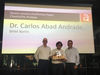
The first two Analytik Jena Science Awards are given to Dr. Carlos Abad of the Federal Institute of Materials Research and Testing (BAM), Berlin, and Natalie Rangno of the Institute of Wood Technology Dresden. With this award, Analytik Jena is honoring scientific articles in which Analytik Jena prod more
Analytik Jena has now achieved particular recognition in China: At this year’s Annual Conference of China Scientific Instruments (ACCSI) the Company received multiple awards, including being named as one of the ten most influential foreign suppliers. Two Analytik Jena products also received recognit more
Analytik Jena AG's company museum presents the history of analytical measuring technology in Jena to visitors, customers, business partners and interested guests over 70 square meters, and showcases the continuation of instrument development at Analytik Jena up to the present day. More than 40 exhib more
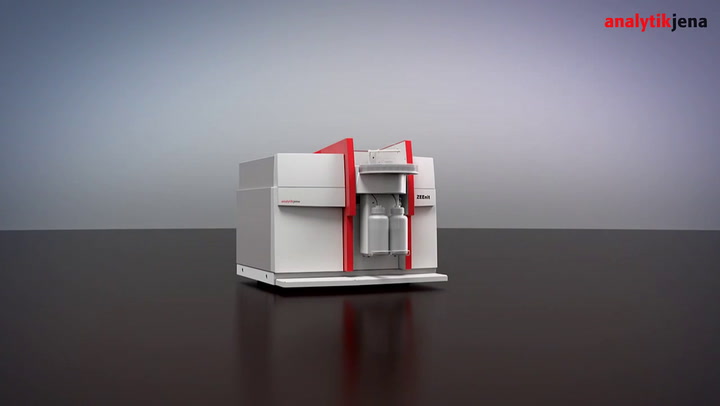

The ZEEnit 650 P graphite furnace/hydride Zeeman atomic absorption spectrometer and the ZEEnit 700 P compact tandem graphite furnace/flame/hydride spectrometer offer many advantages. Both instruments in the ZEEnit series are equipped with an 8-lamp turret to provide a high analysis capacity Full ... more

About analytica-world.com
analytica-world.com is the industry portal of the international trade fair analytica, which is organized by Messe München. It features useful information about markets, trends and innovations. It is operated by LUMITOS AG, one of analytica's official sales partners.

Advertising at analytica-world.com
Our advertising formats support you in getting your message across to a clearly defined target audience.